

Room 1:
Room 2
Room 3
Room 4
The Biography Corridor
Room 5
Room 6
Room 7
Private Study
Room 8
Room 9
Room 10

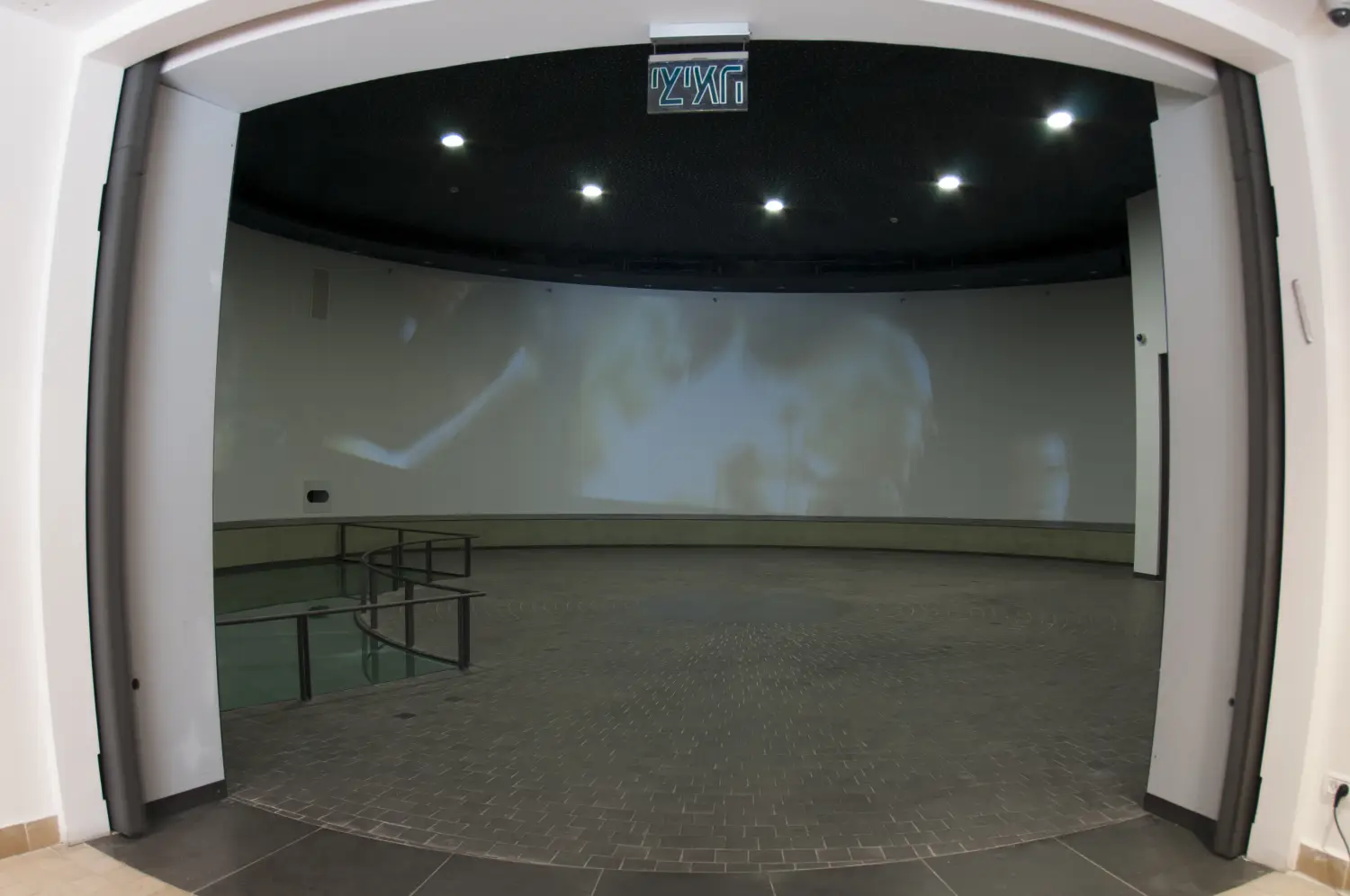
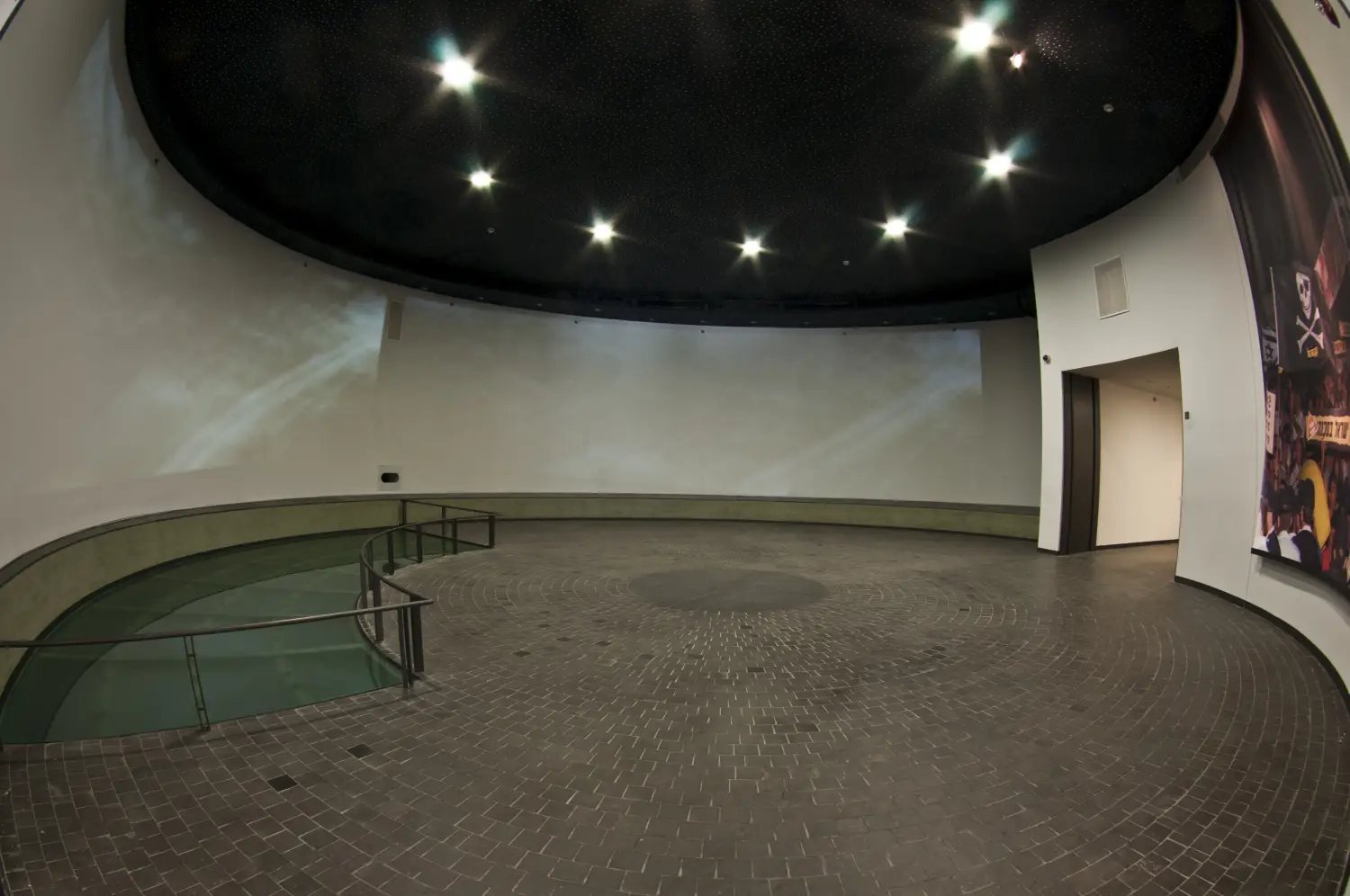

The visit to the Israeli Museum starts in a round space simulating the Kings of Israel Square on November 4, 1995, the night of the assassination of the Prime Minister and Defense Minister, Yitzhak Rabin.
Visitors are invited to enter the square, whether as supporters of the rally that took place that same evening or as opponents. Upon exiting the square, the visitors arrive at the beginning of a descending spiral route that portrays the life of Yitzhak Rabin. This route opens along its entire length to large display rooms, presenting the saga of the State of Israel and Israeli society.
Within the rooms, there are two secondary axes:
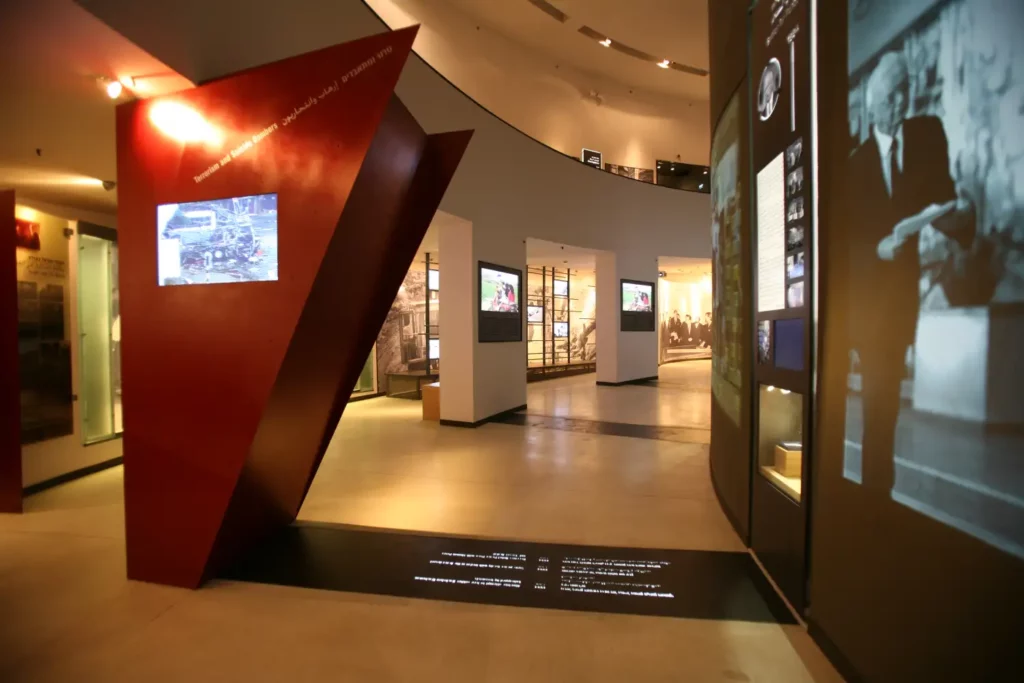
One displays the conflicts and disputes that have divided Israeli society since its inception. This axis is shown in red steel triangles, breaking through the museum’s walls.
A second axis is a global timeline, noting prominent events that occurred worldwide, parallel to local events. This axis is situated on the floor of the museum.
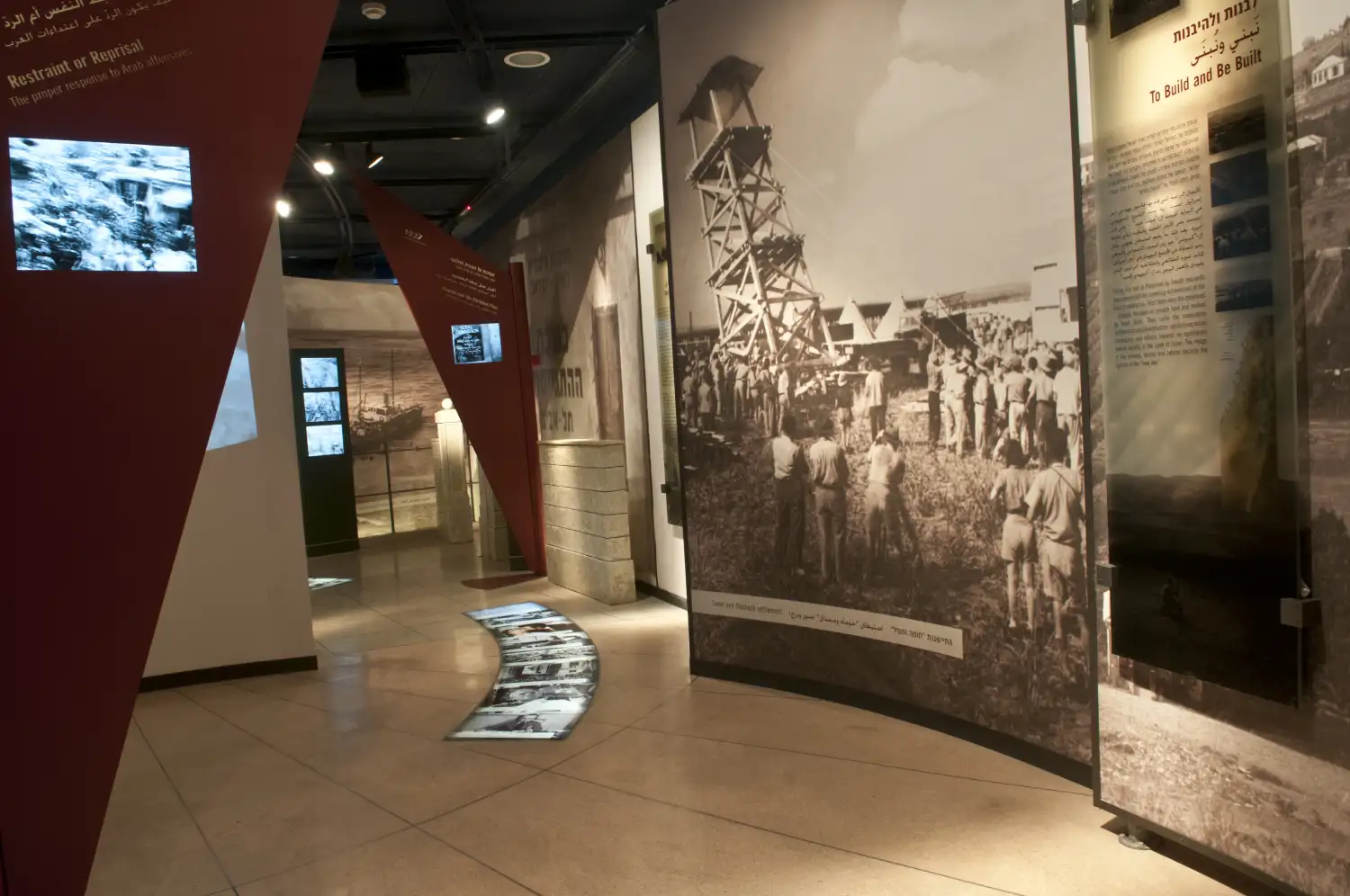
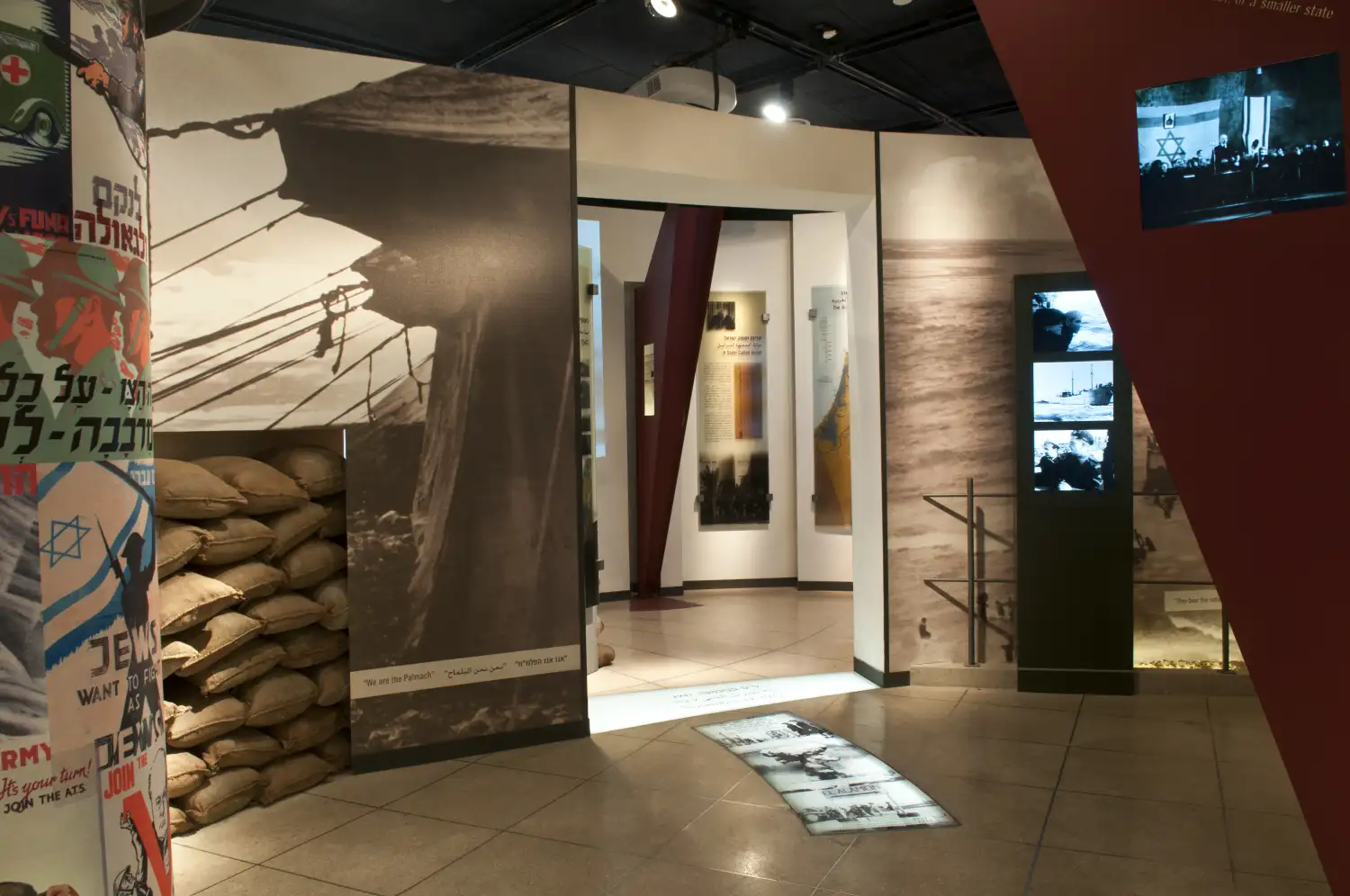
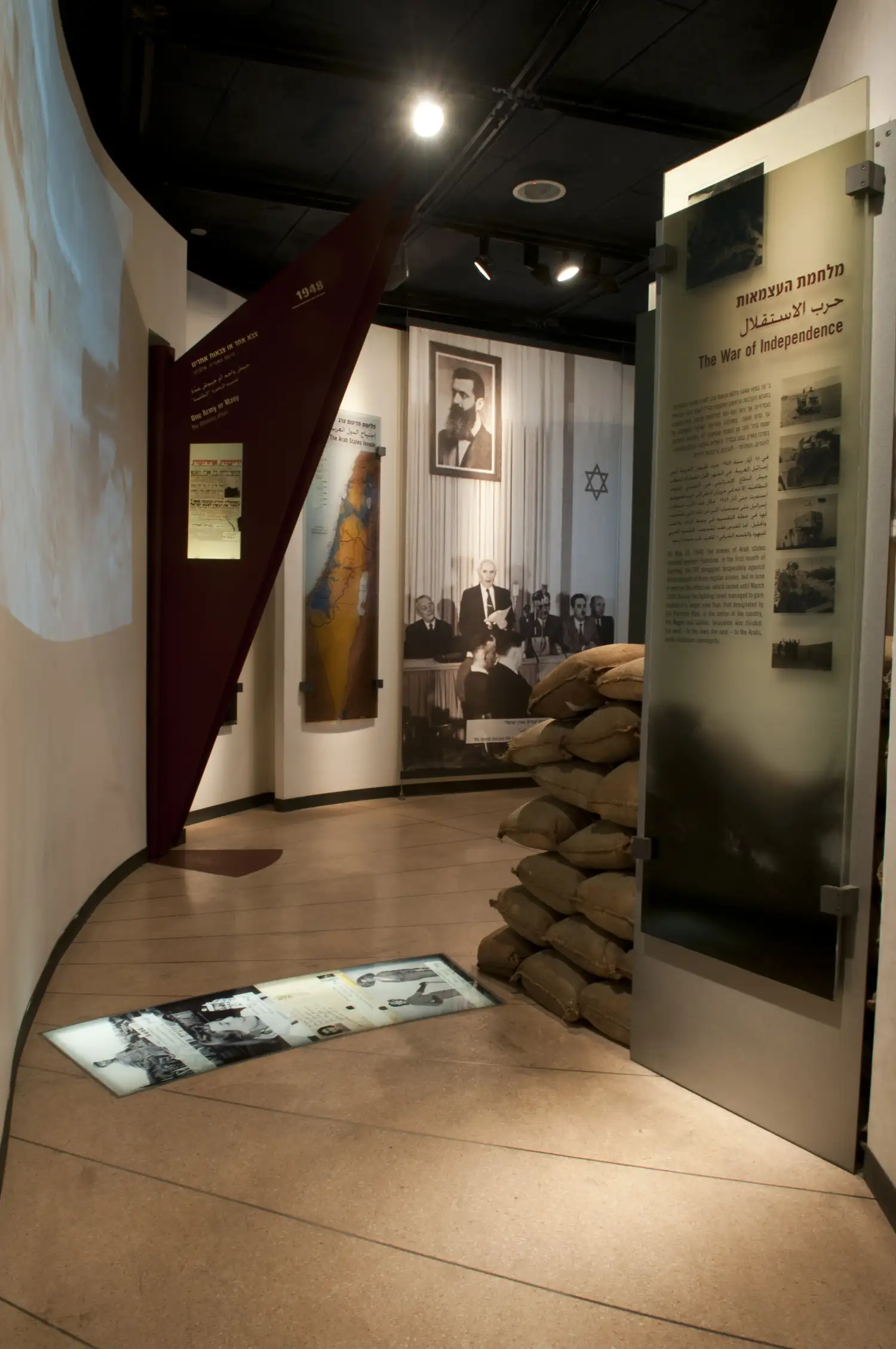
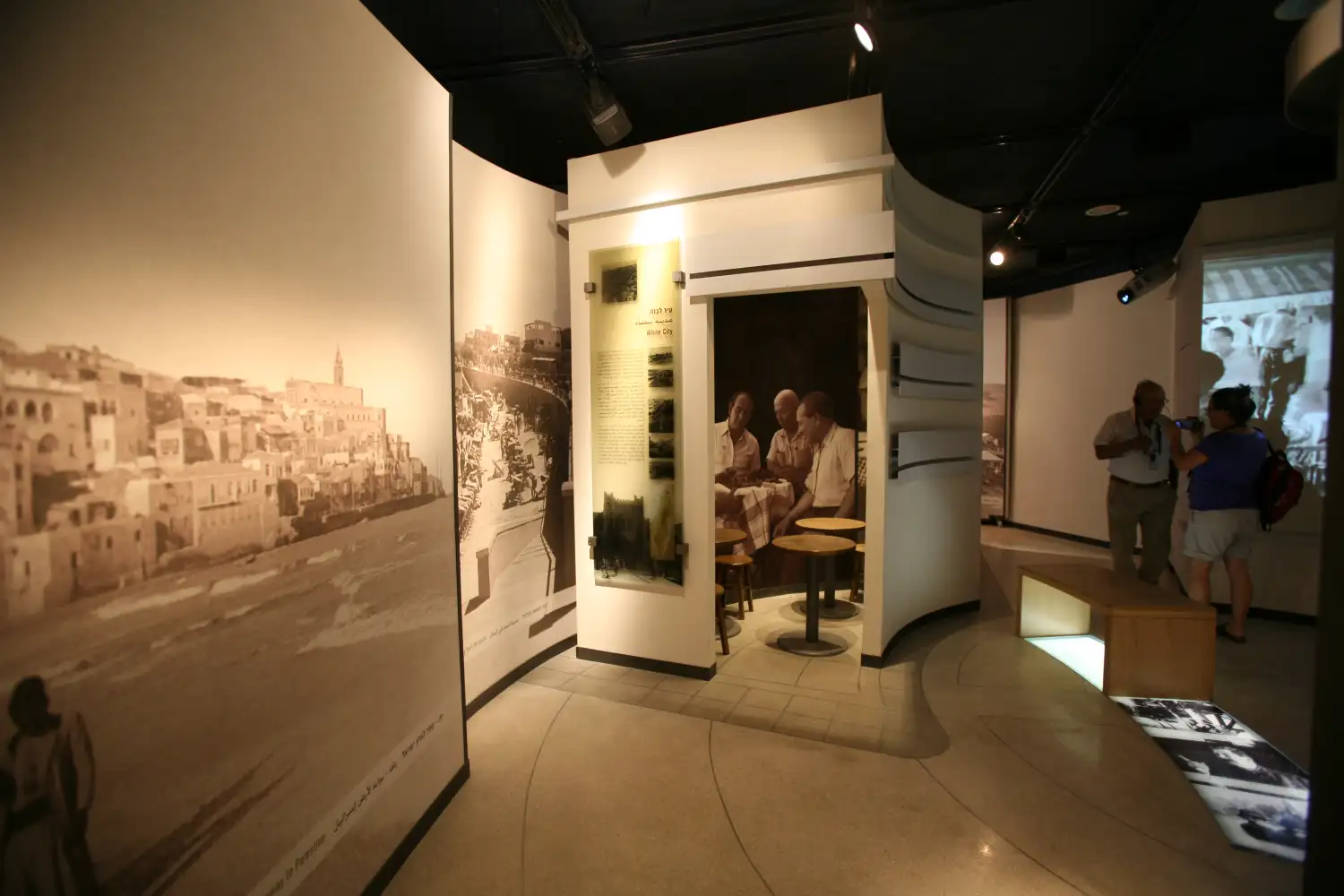
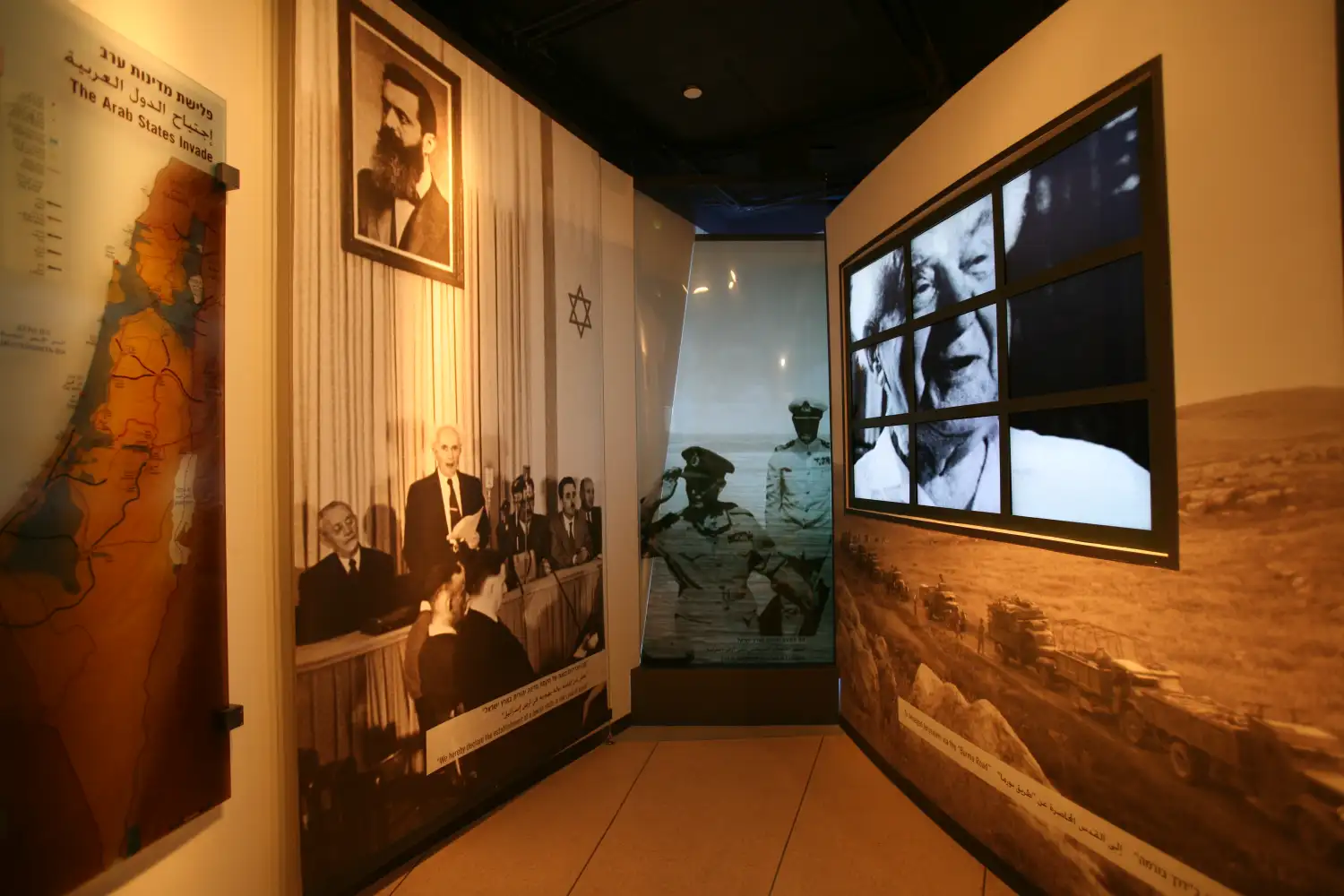
The socio-political-state entity in formation in the pre-state settlement [the Yishuv] until the beginning of World War II and thereafter until the establishment of the state is presented in this room.
The social aspect is presented through Tel Aviv of the 1920s and 1930s, portrayed with its multifaceted character via “The White City.” Later, the “Working Settlement” is presented with a full range of display techniques. The aspect of security is presented, among other things, via the Great Arab Revolt and volunteers to the British army during World War II. One of the ways in which the state aspect is presented is shown by the debate that arose in the Jewish Yishuv with the proposal of the First Partition Plan in 1937 (Peel Commission).
The second part of this chapter deals with the War of Independence, describing major events and battles until the signing of the Armistice Agreements in 1949.
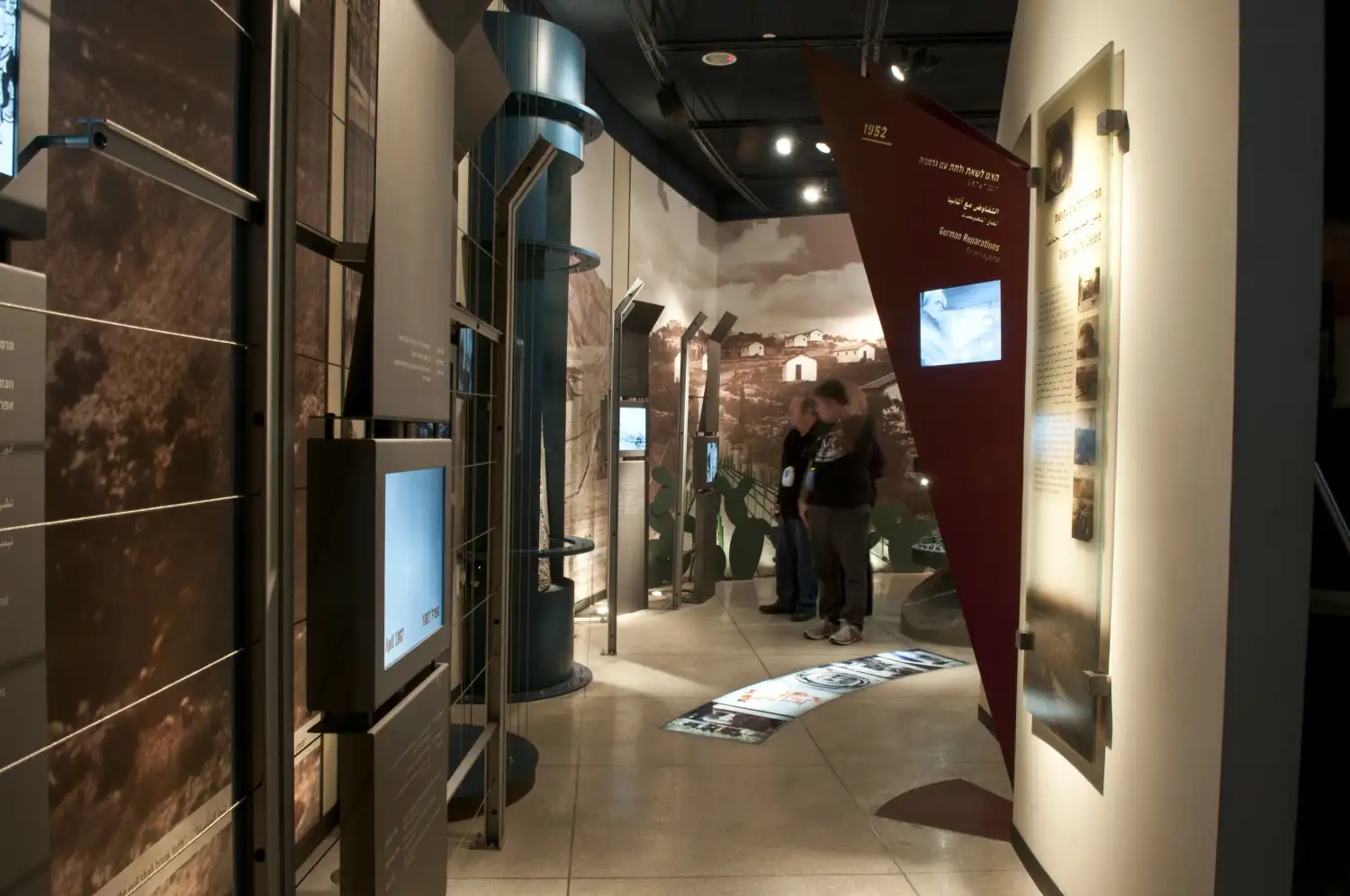
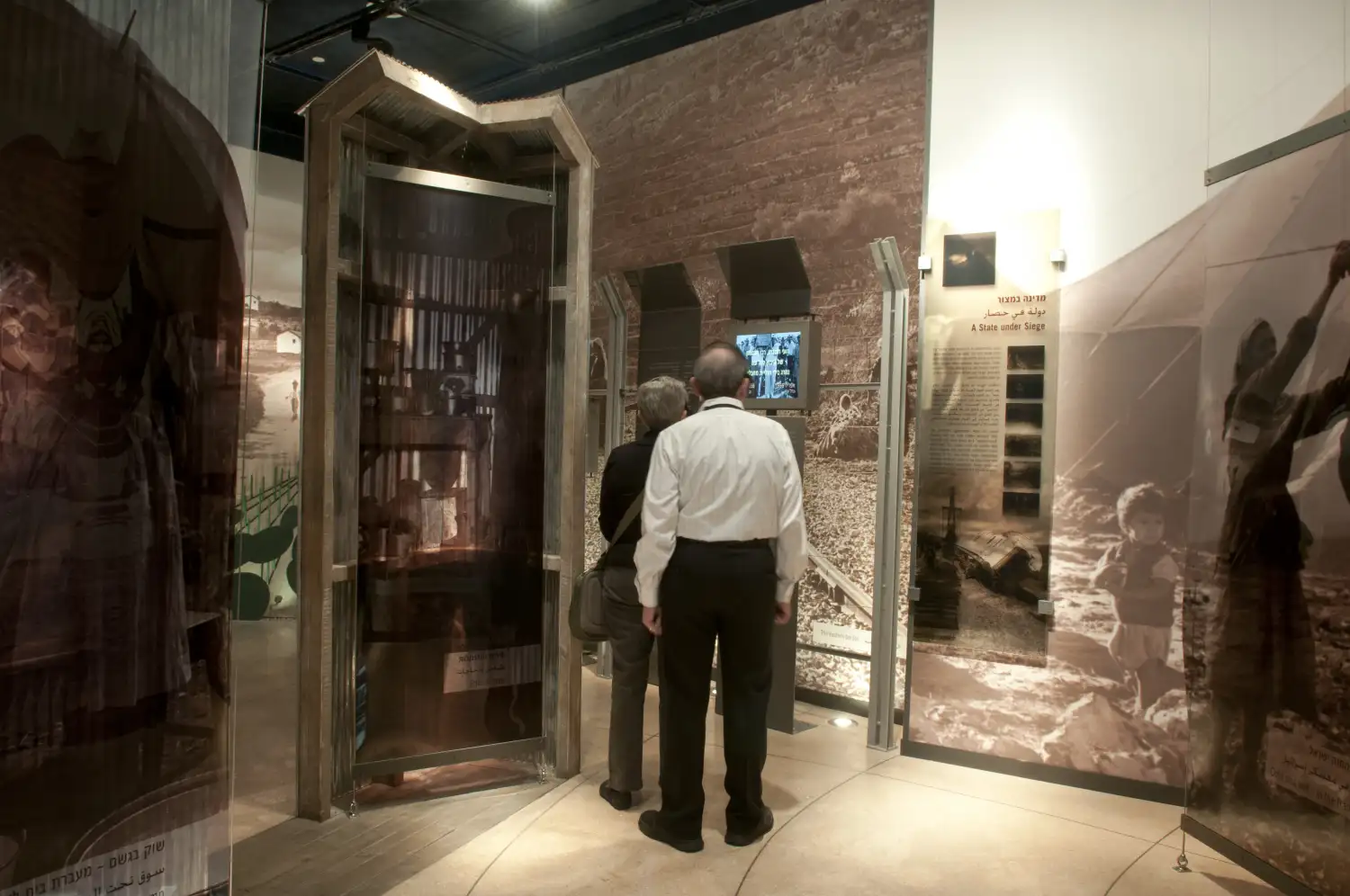
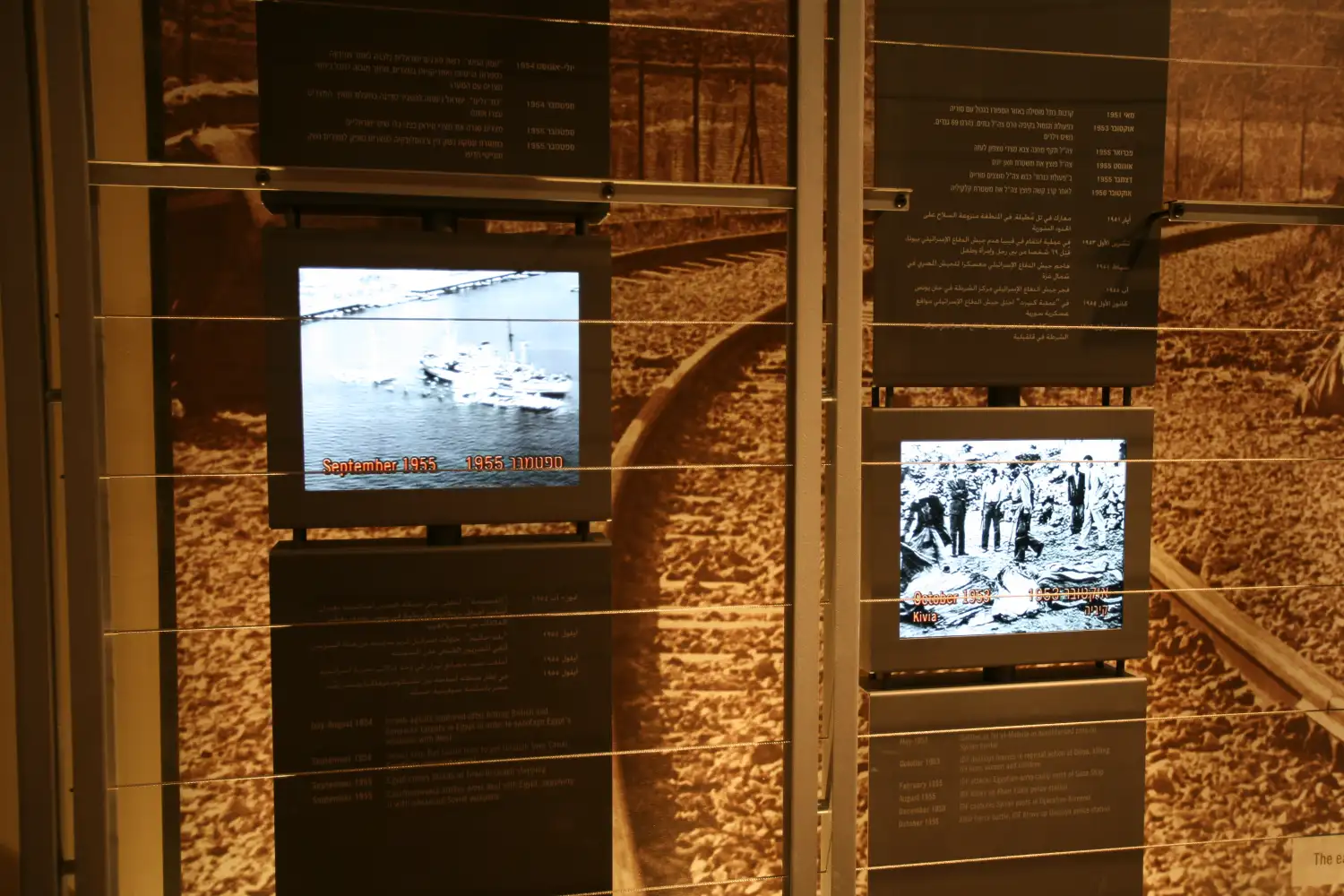
This room represents the first two decades of the State of Israel.
The room opens with a description of the large waves of aliyah (immigration), the settlement of the olim (new immigrants) throughout the country, the establishment of development towns, the large nationwide companies of the 1950s, and the cultural wealth and diversity. At the same time, the display shows the young Israeli nation’s sense of being under siege following a series of security incidents throughout the period. The room concludes its display on the eve of the Six-Day War by describing the waiting period that preceded the war.
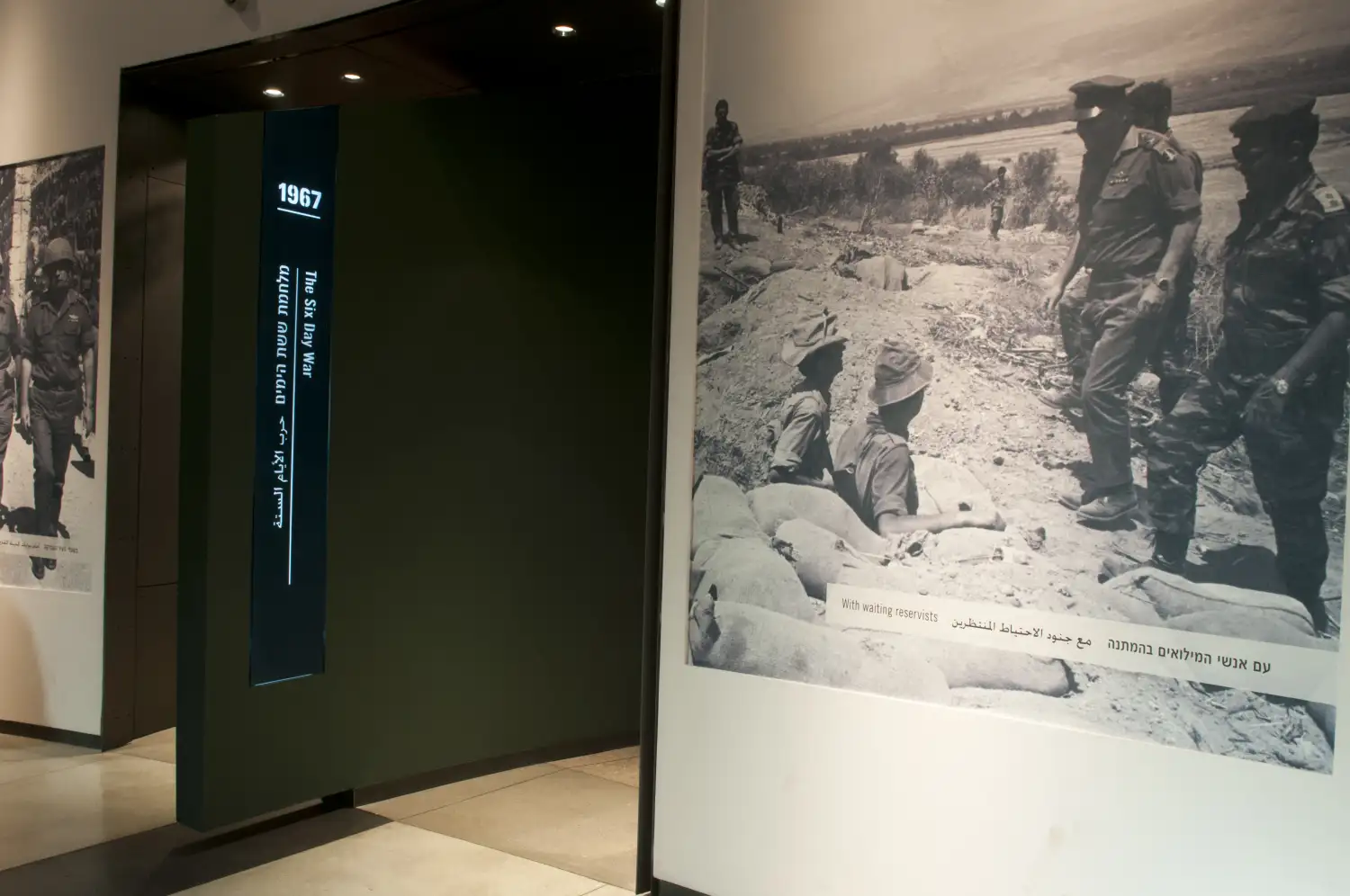
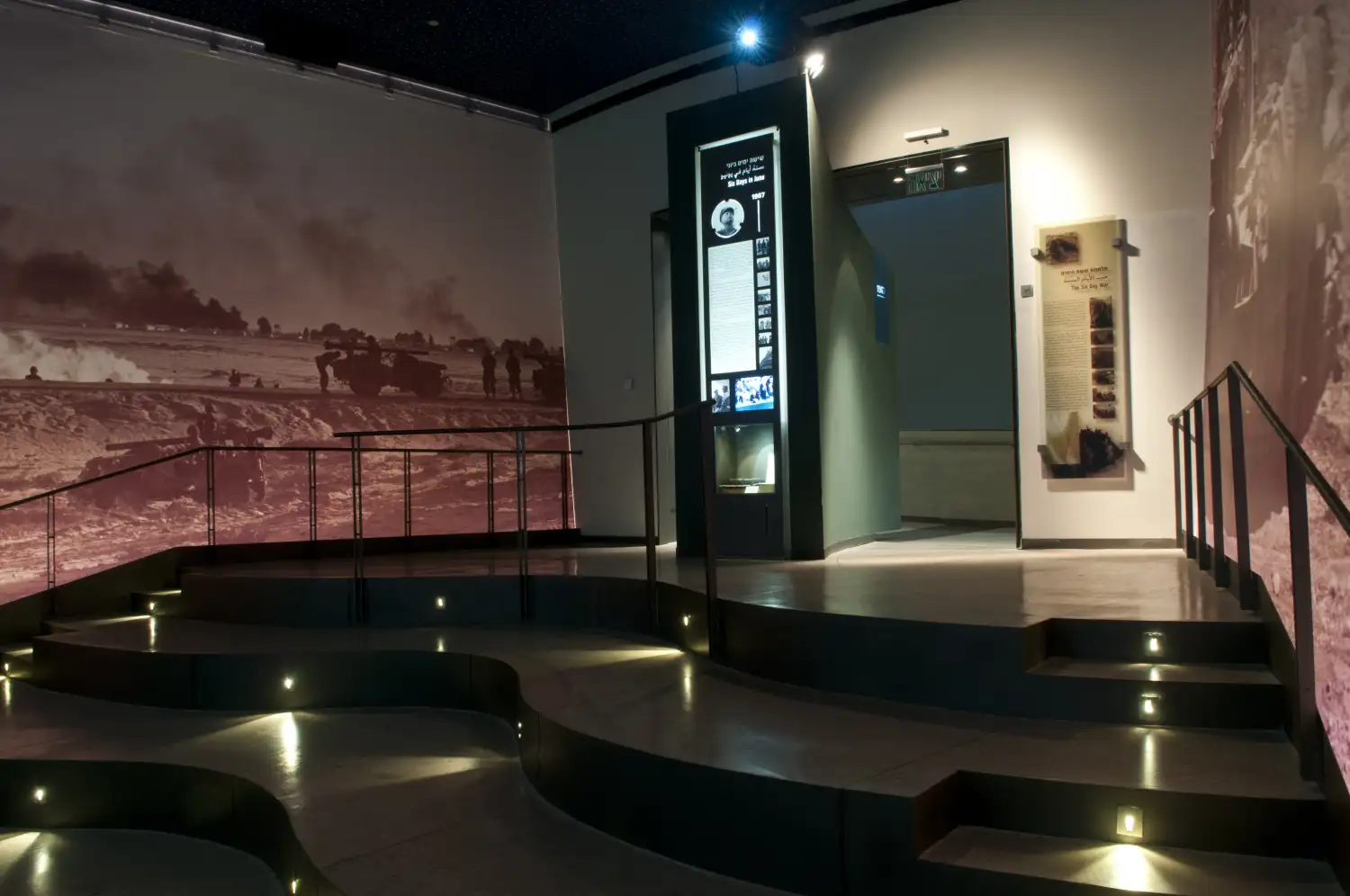
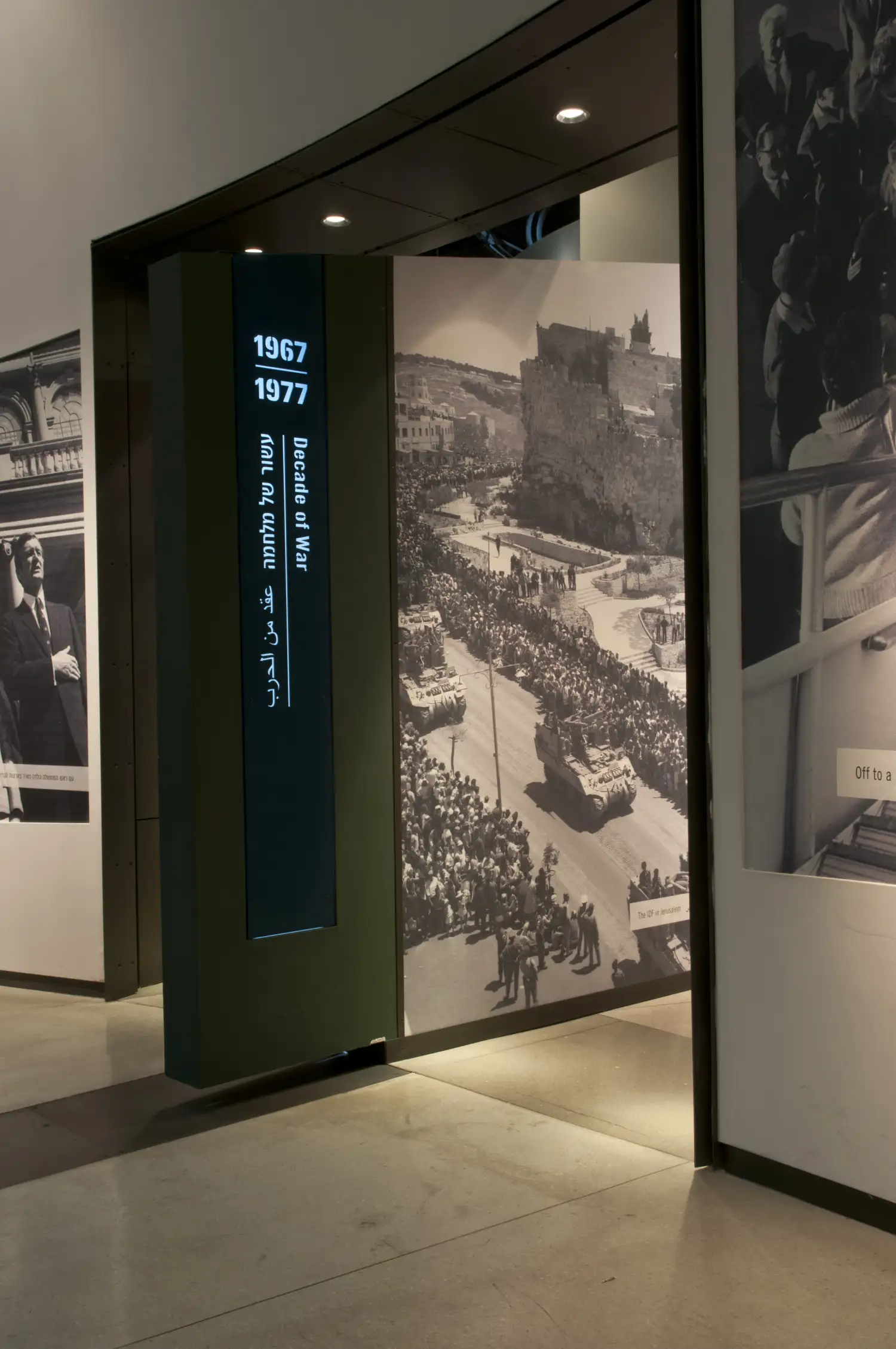
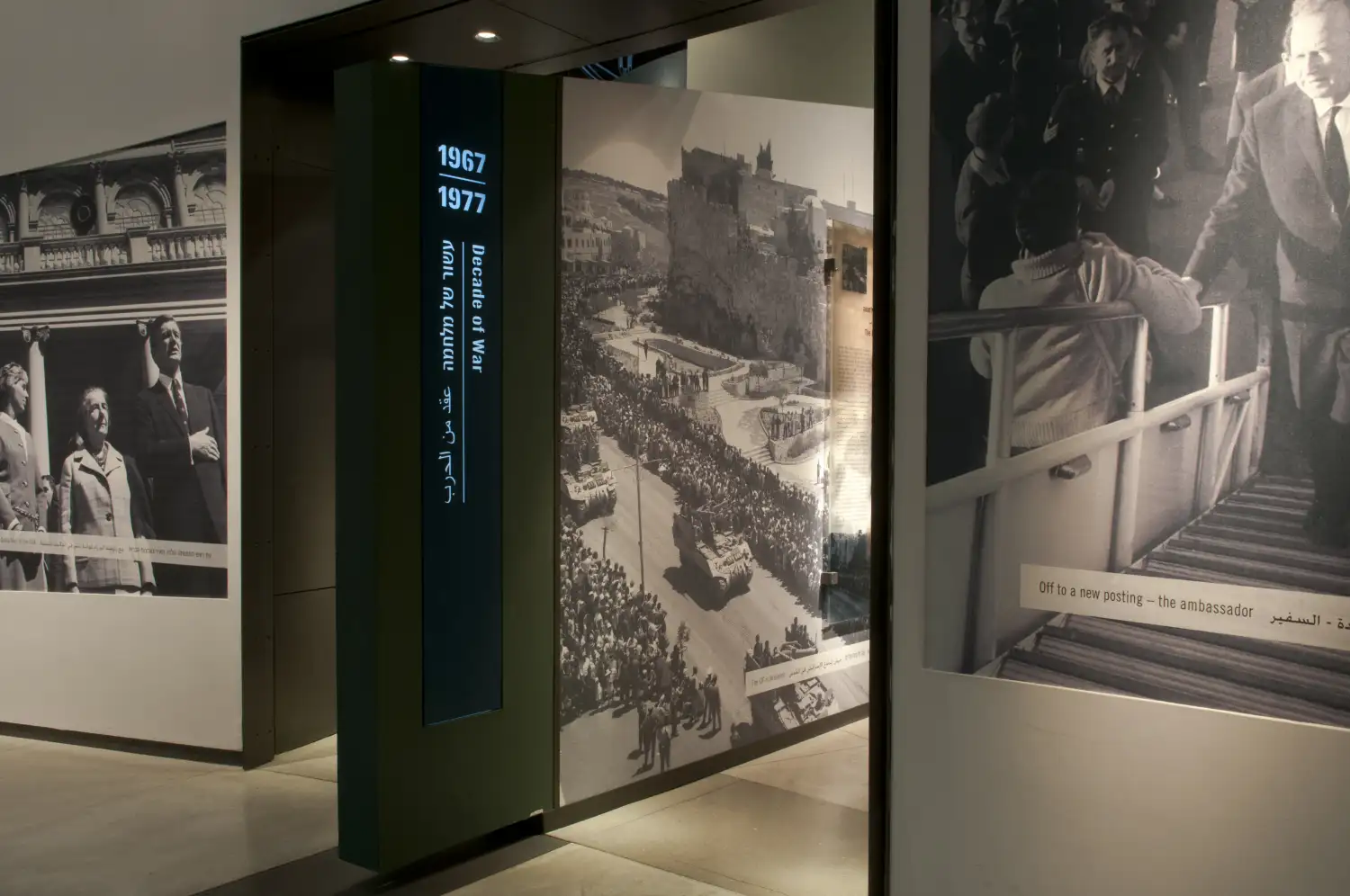
The story of the Six-Day War, which generated a new social, cultural, and defense reality in the State of Israel is presented in this room.
The main technique used in this room is a seven-minute movie showing the stages of the war, the different fronts, and the results of the battles.
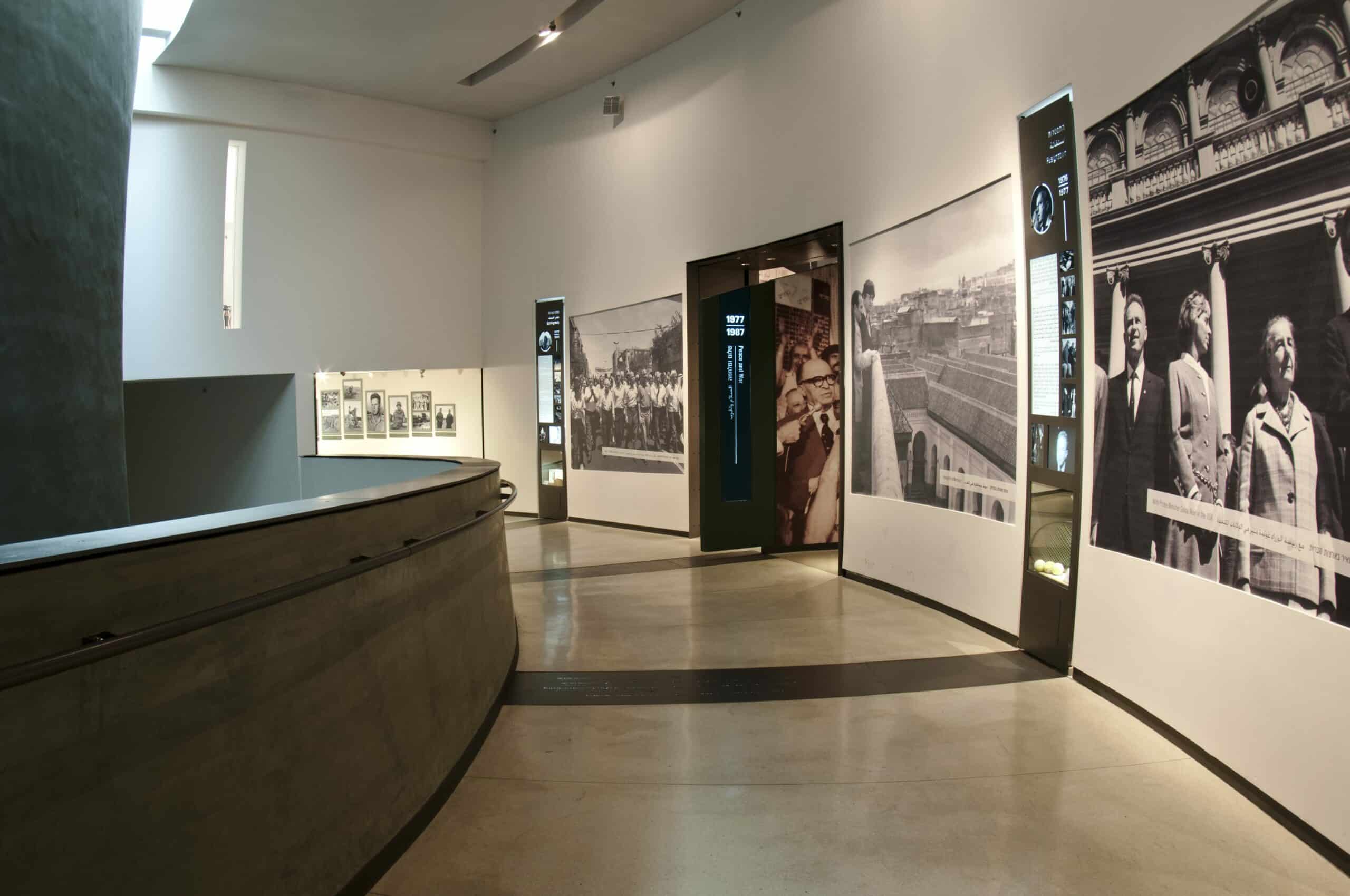
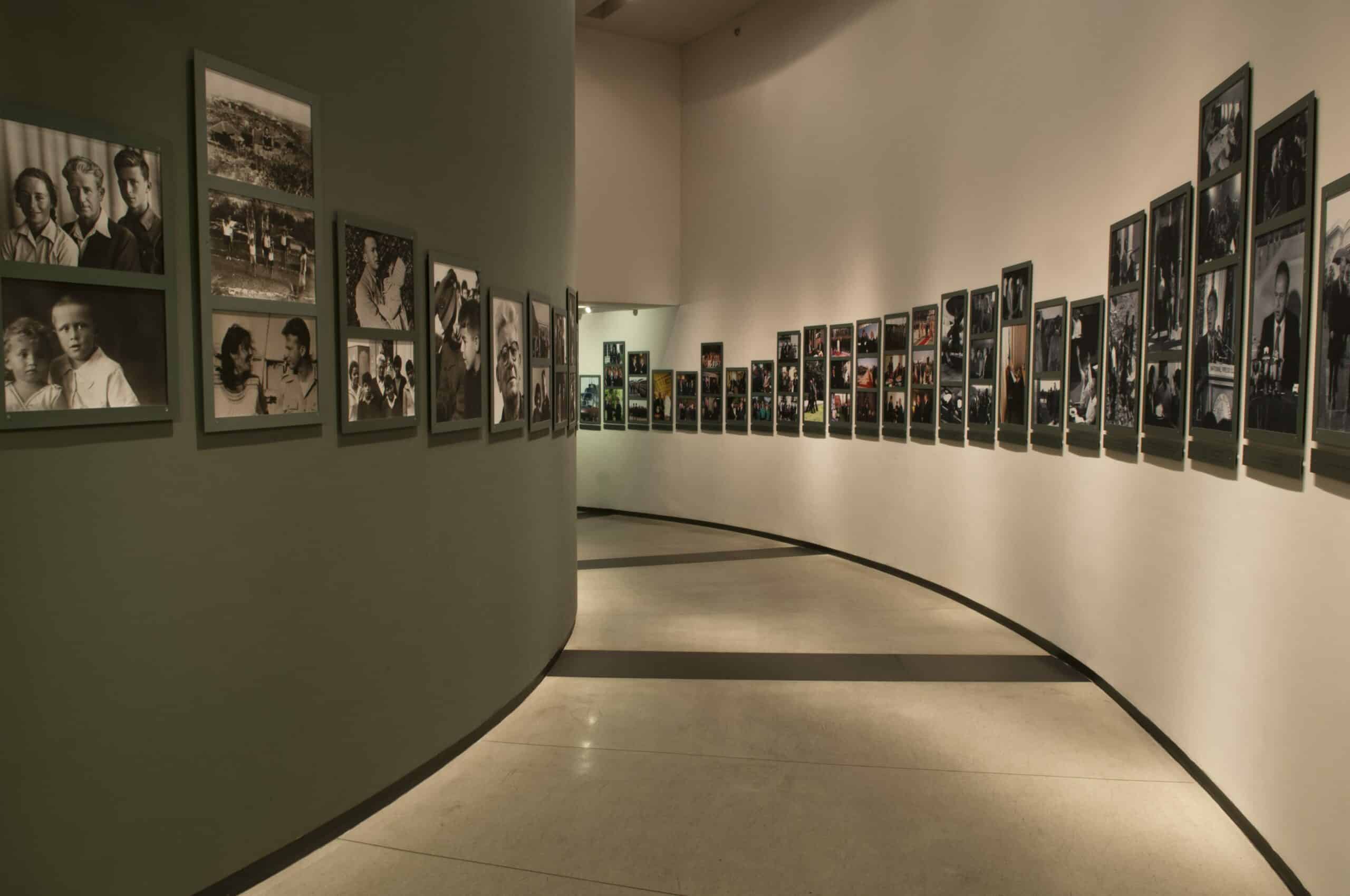
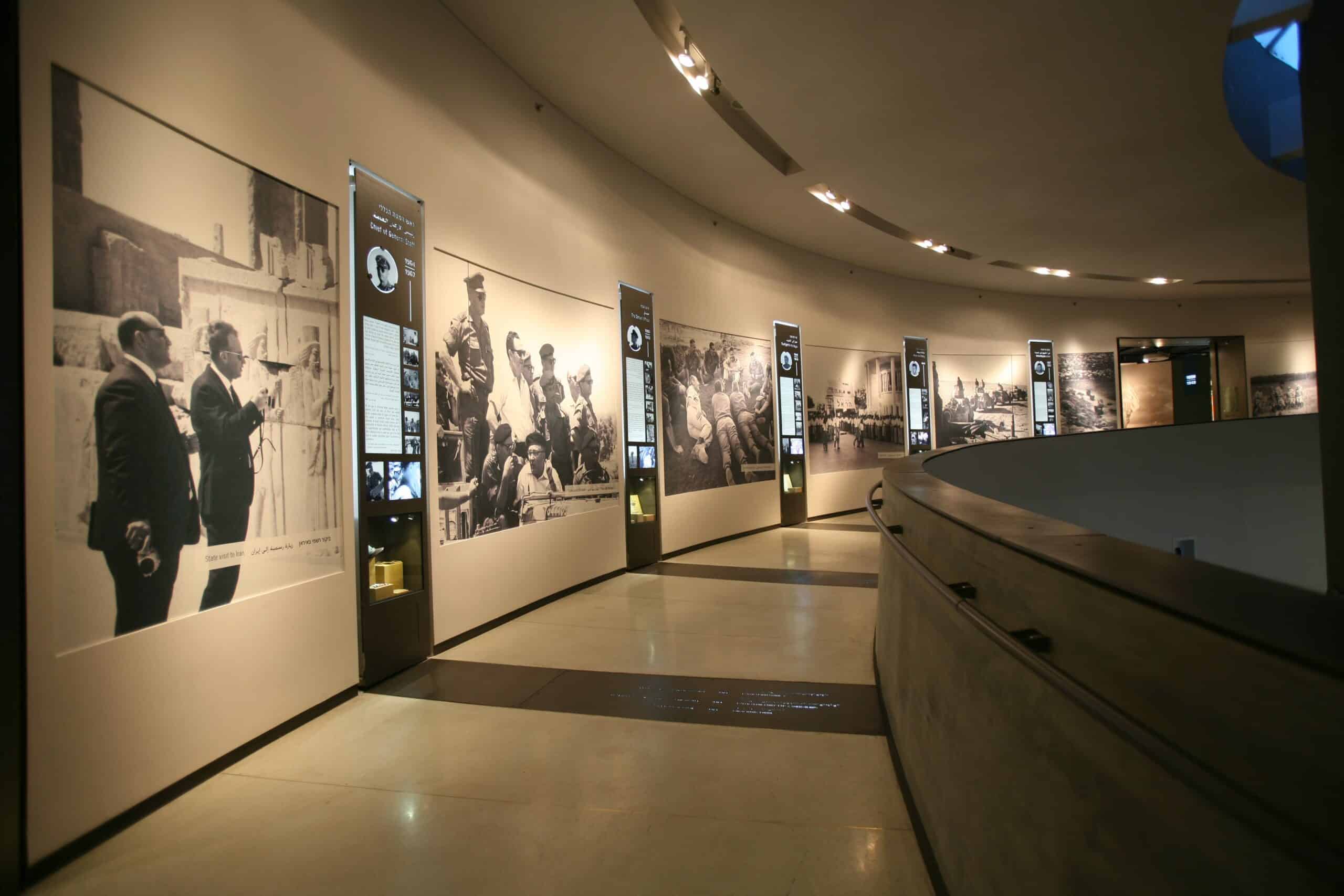
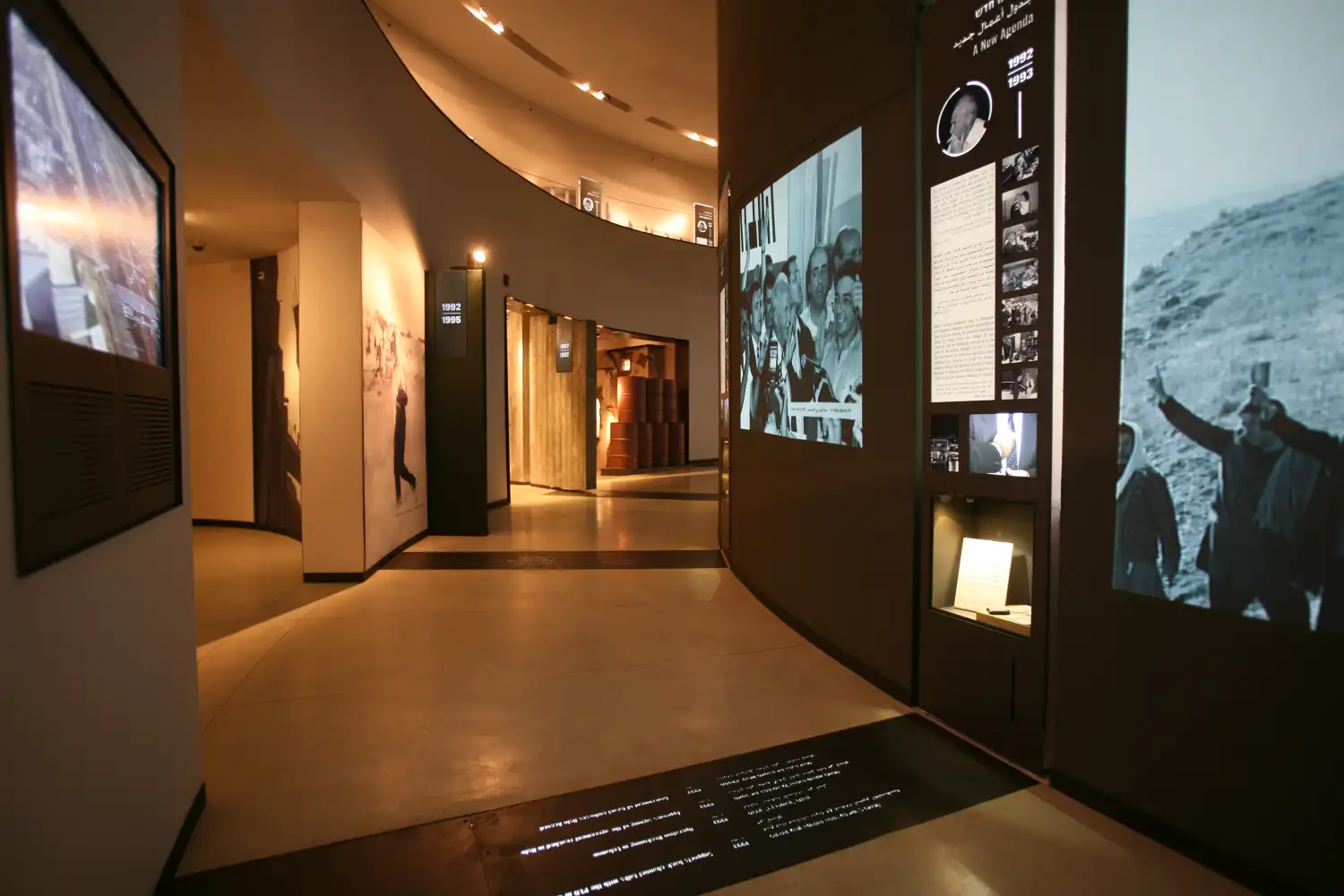
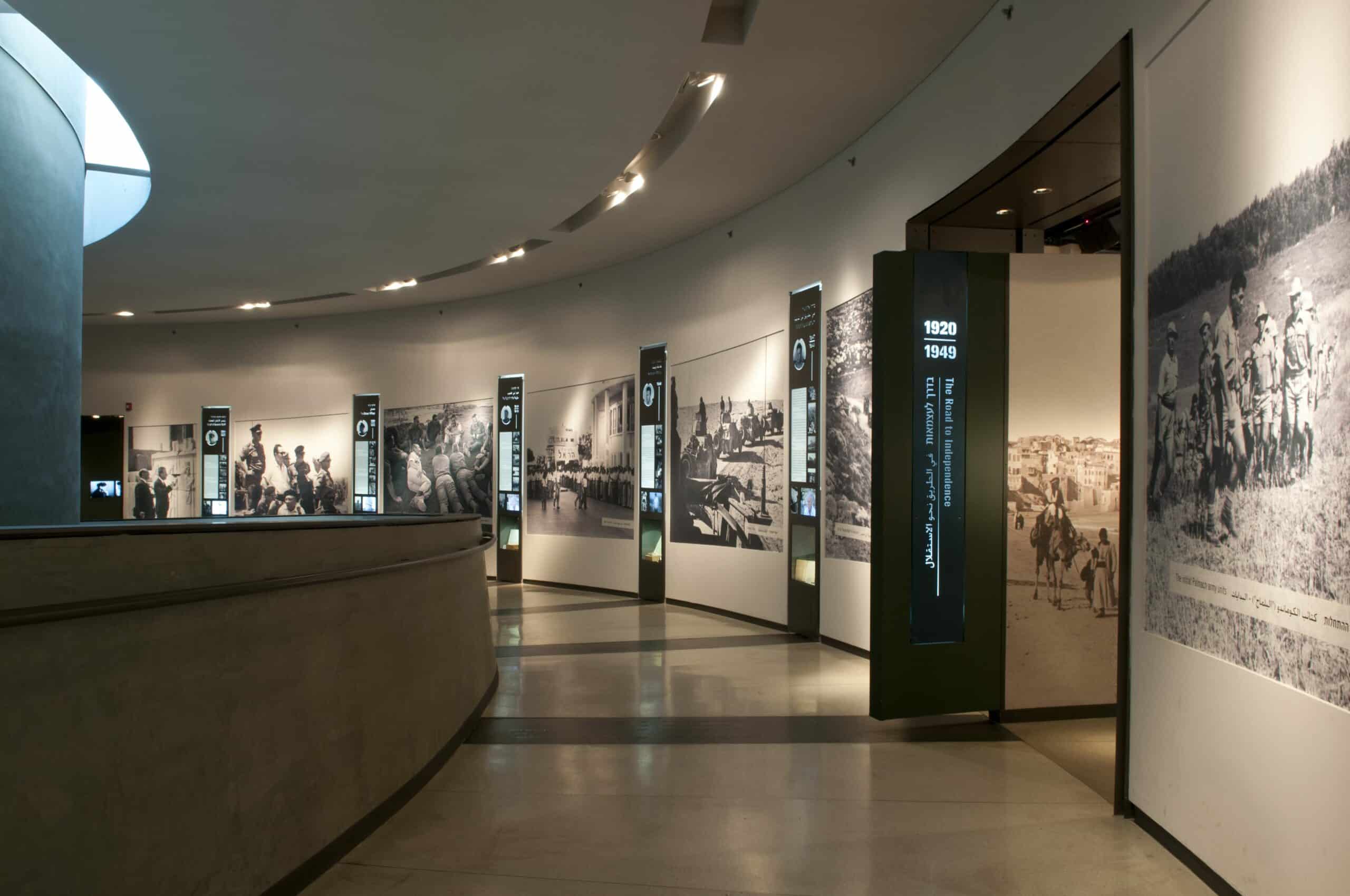
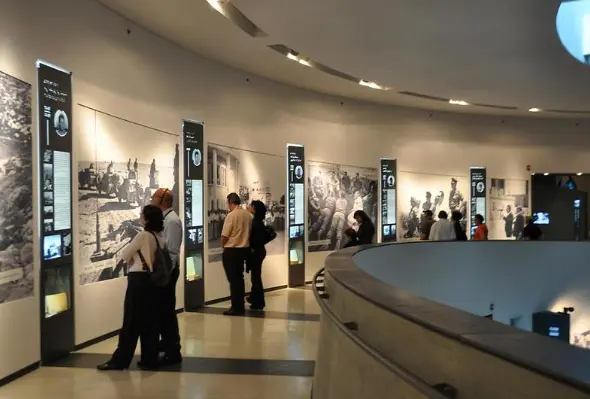
The Yitzhak Rabin photo gallery is seen towards the final section of the museum, presenting a quick overview of the course of his life.
On the right side of the short corridor, his public life is presented, showing the diversity of positions he held: a military figure, Chief of Staff, ambassador, Minister of Defense and Prime Minister. On the left side of the corridor, his family life is exhibited – his father’s and mother’s home, Nehemiah Rabin and Rosa Cohen, and the home he established with Lea Schlossberg.
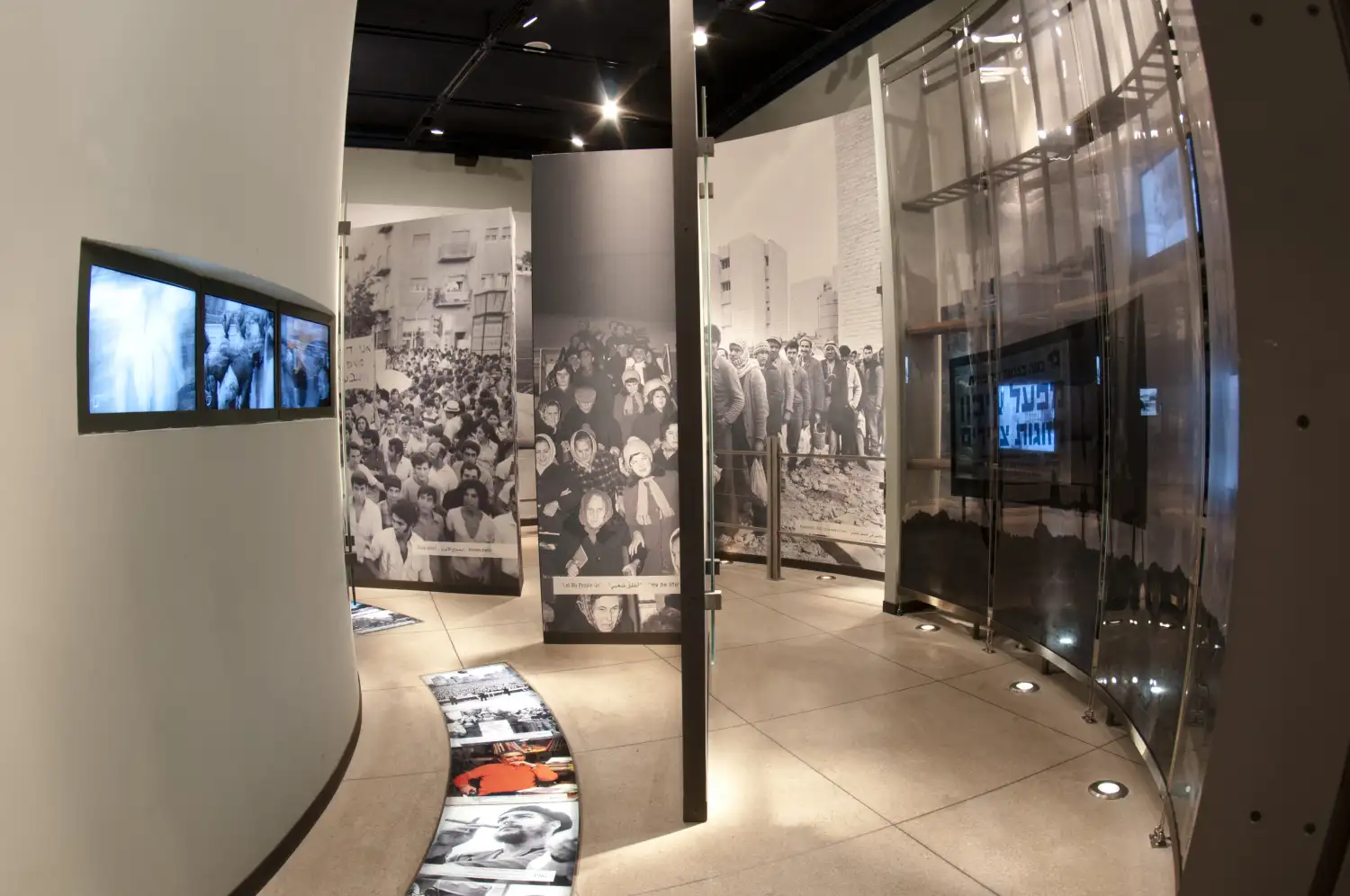
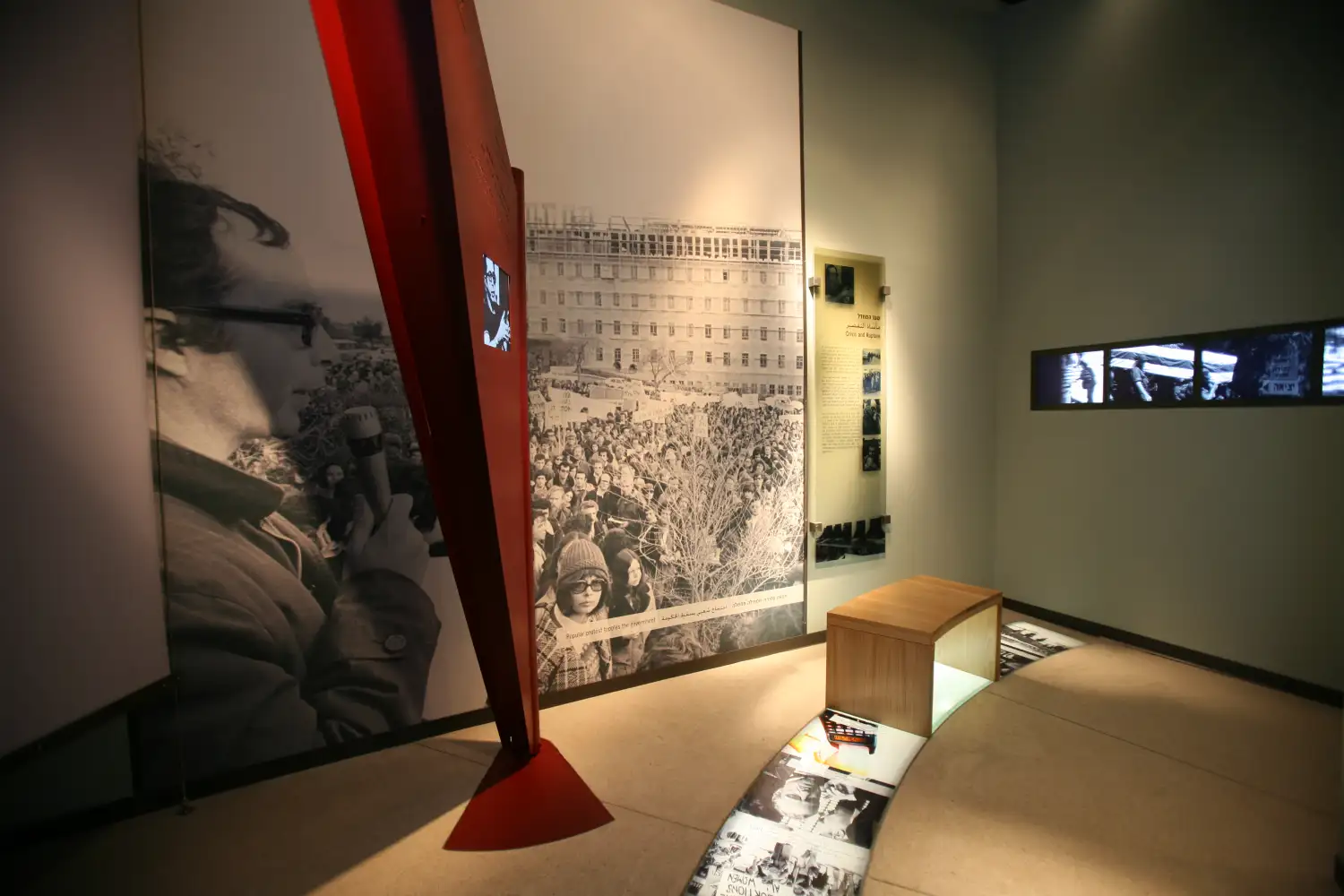
This room deals with the third decade of the State of Israel, on the background of the reality created by the Six-Day War.
The room begins with the high point of the victory in June 1967, moving to the low point of October 1973, and from there to the public protest that toppled the government of Golda Meir, to the first term of Yitzhak Rabin as Prime Minister and the political turnover of 1977.
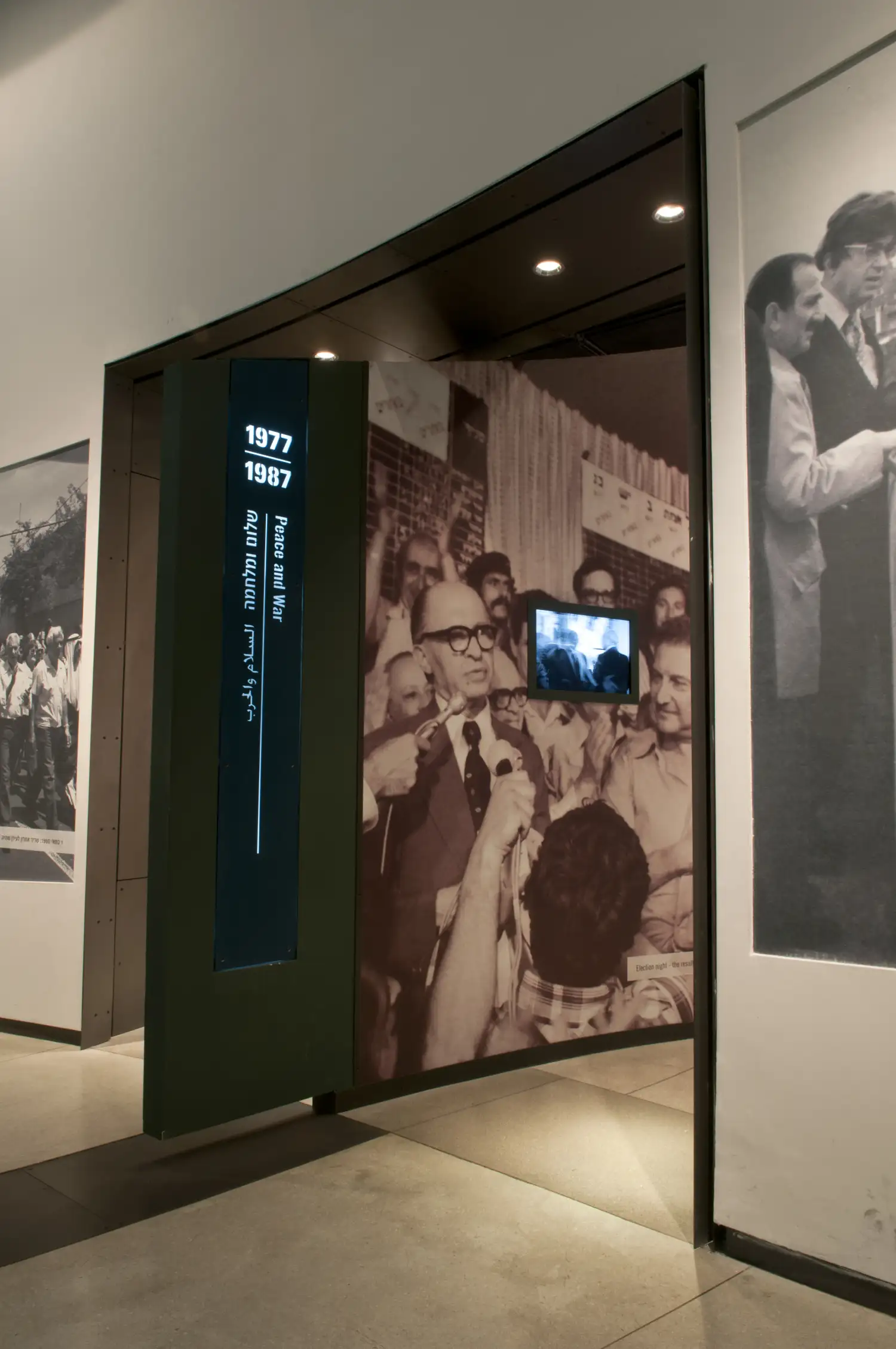
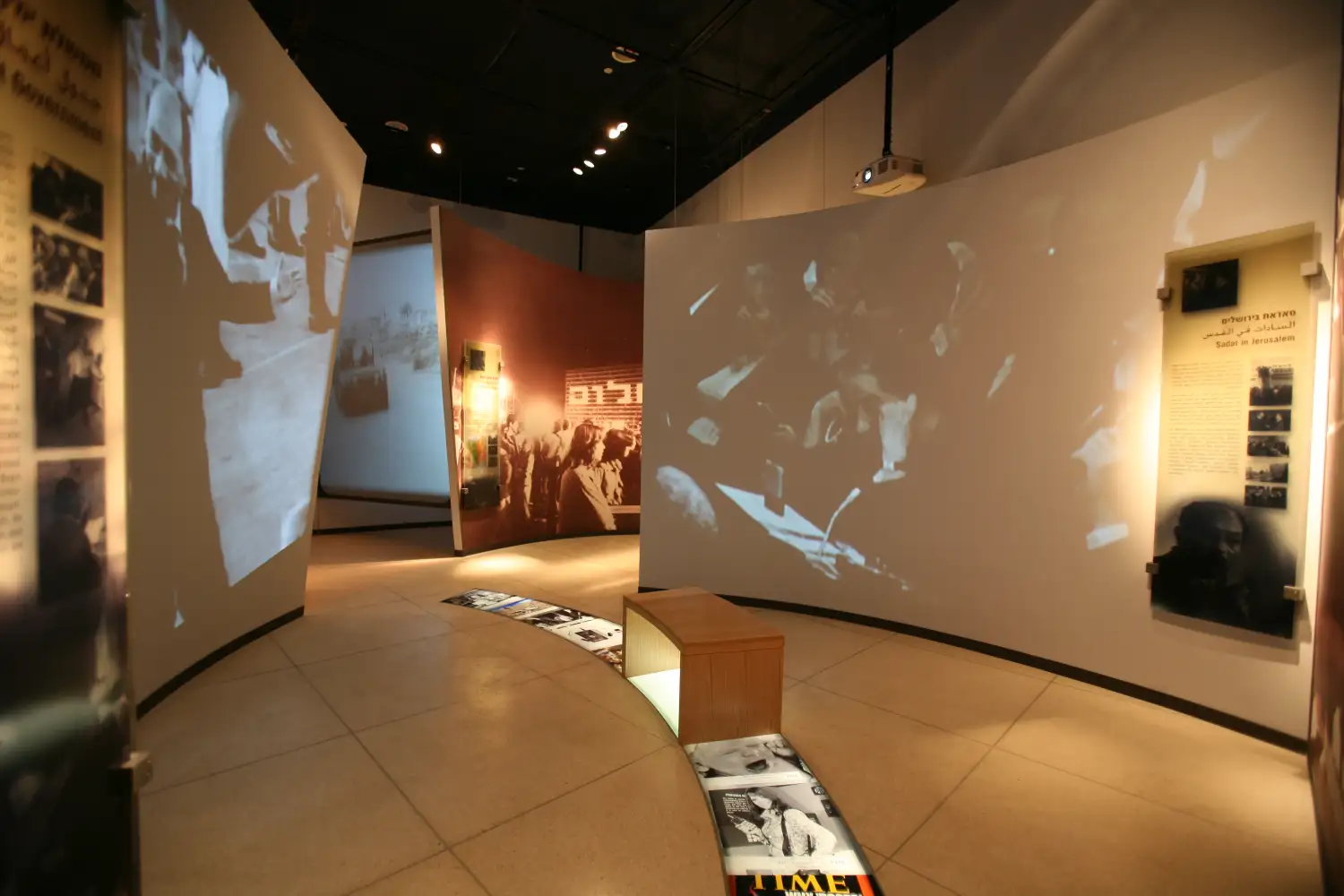
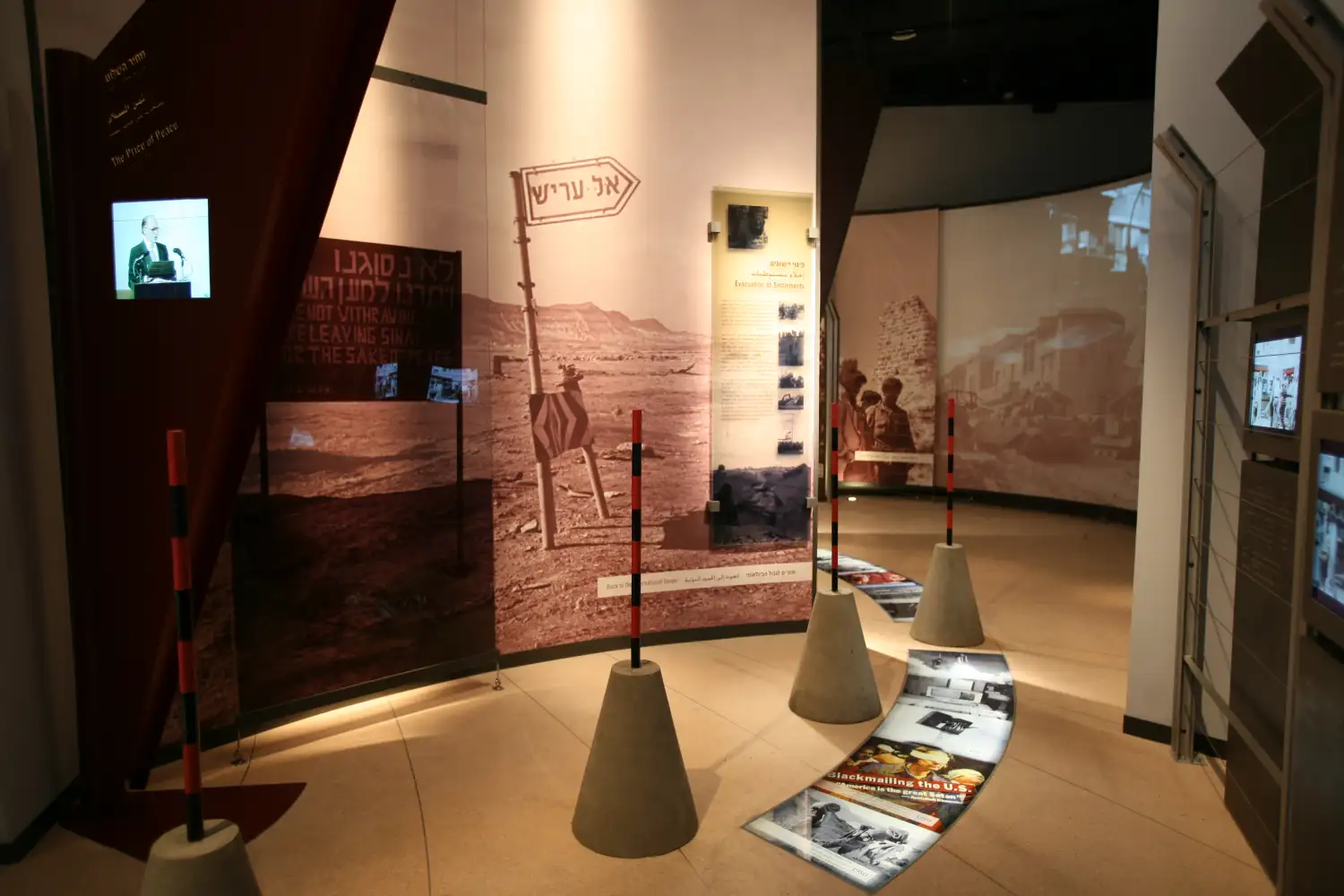
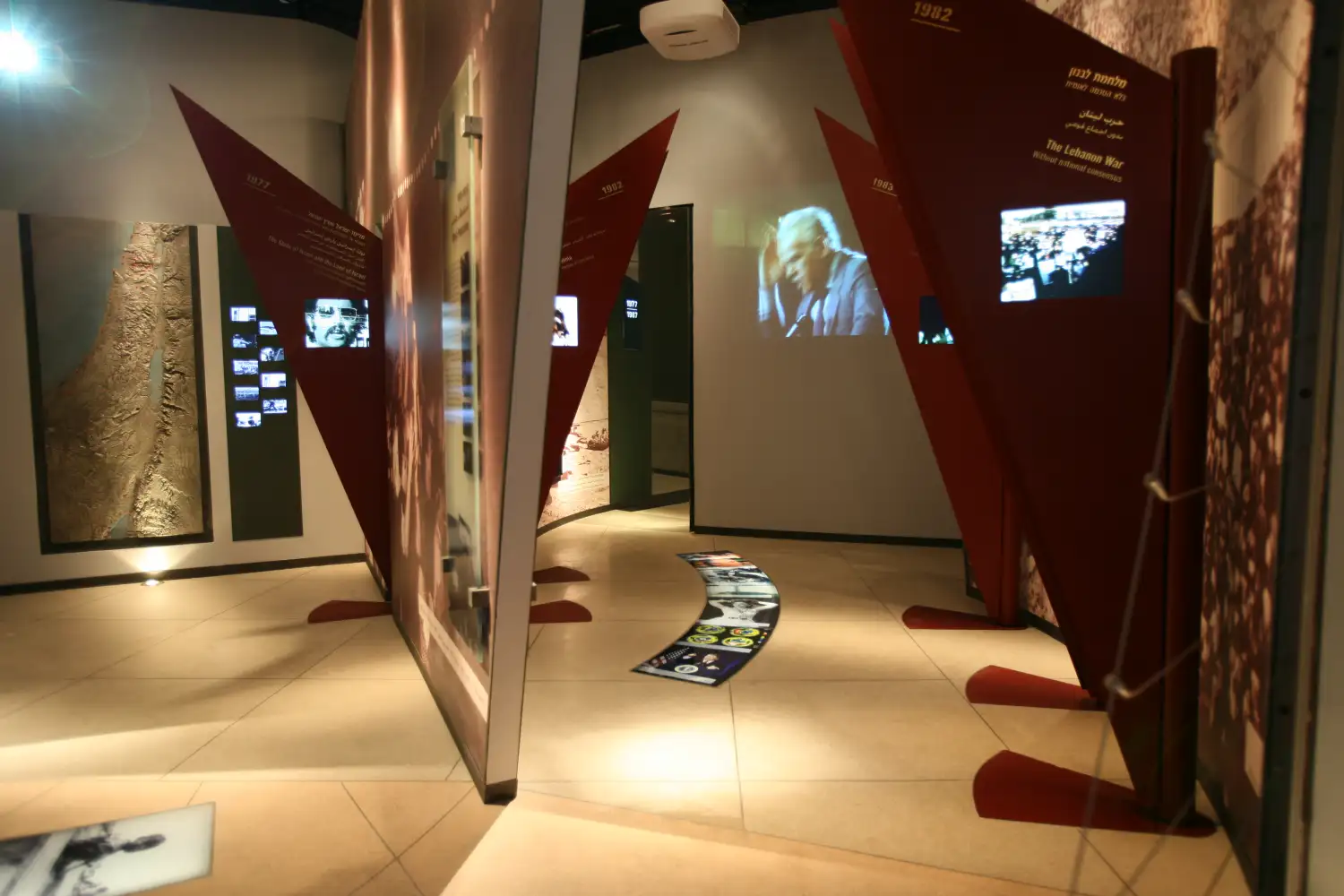

This decade opens focusing on the new political map in Israel with the rise of the right to the government and the peace agreement with Egypt. The second part of the decade deals with the Israeli reaction to the peace agreement and its price (evacuation of Sinai and Israeli settlements in Rafah Salient).
The first part of this room focuses on the great accomplishment of the Likud Government under the leadership of Menachem Begin – the peace agreement with Egypt. Thereafter, the room displays the price of this peace – evacuating Sinai and the demolition of Israeli settlements there. In addition, it presents the economic crisis of the 1980s and the ethnic polarization that grew progressively stronger during those years. The first Lebanon War and the rift it caused in Israeli society are shown in the second part of the room.
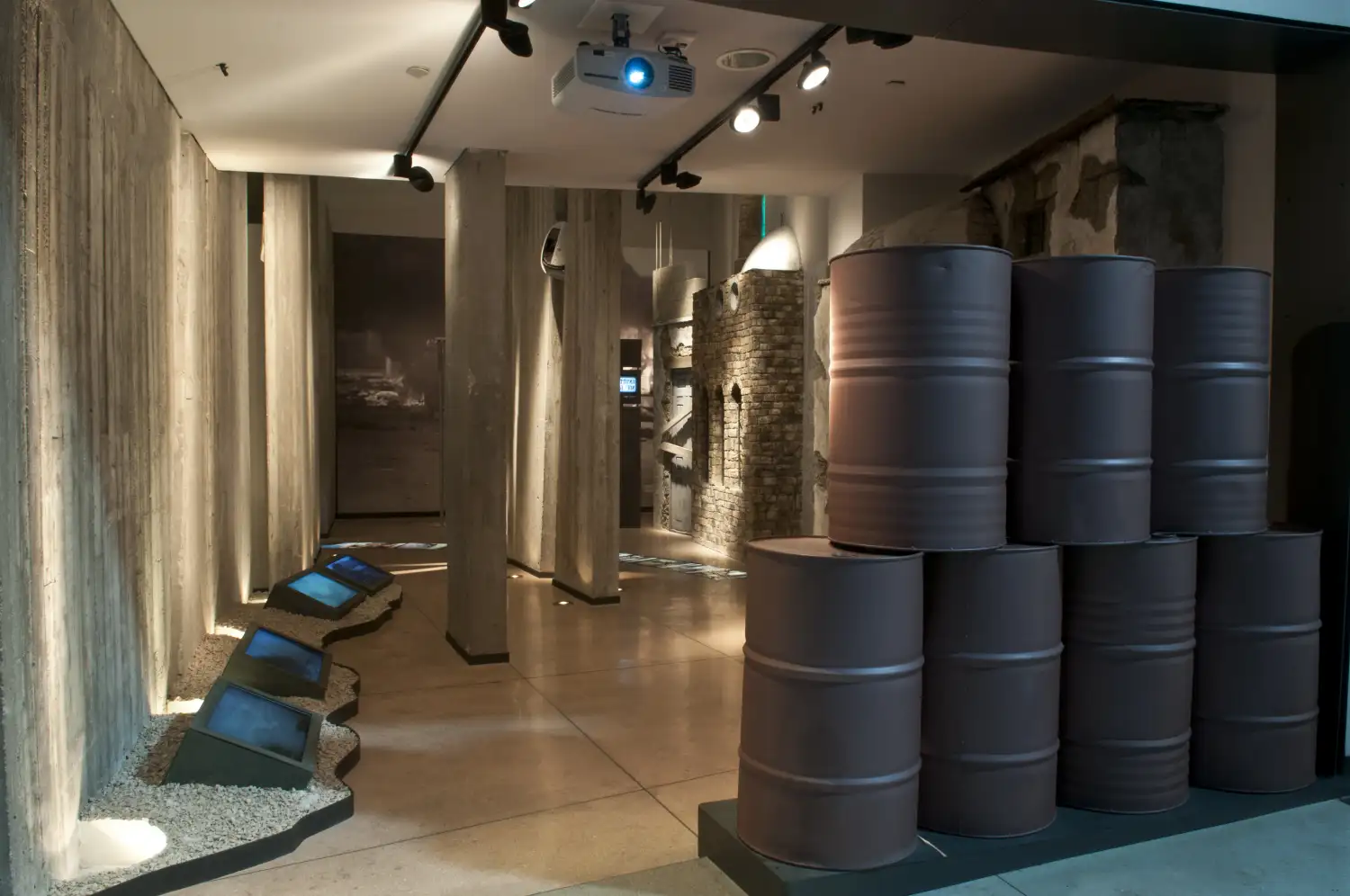
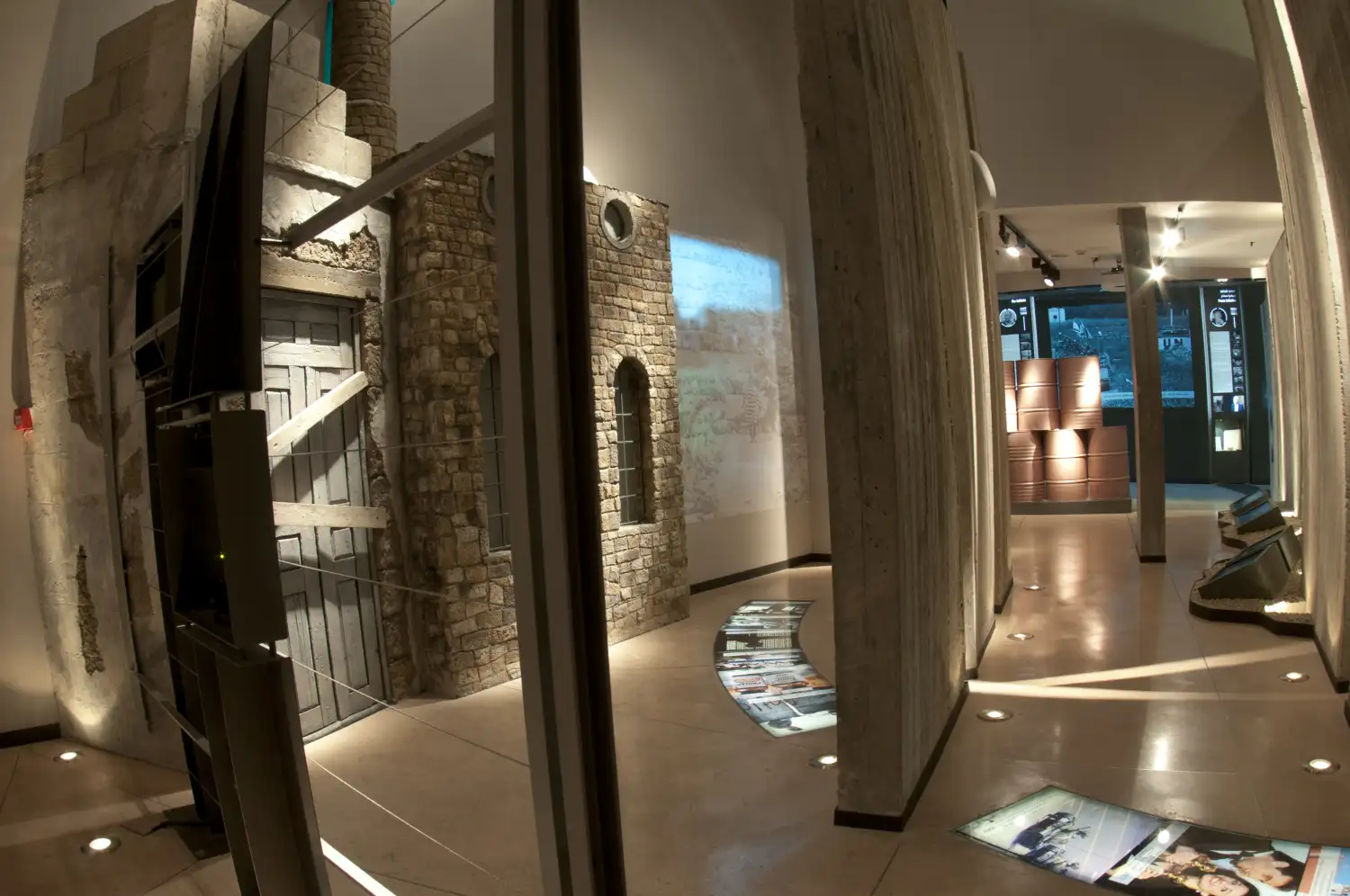
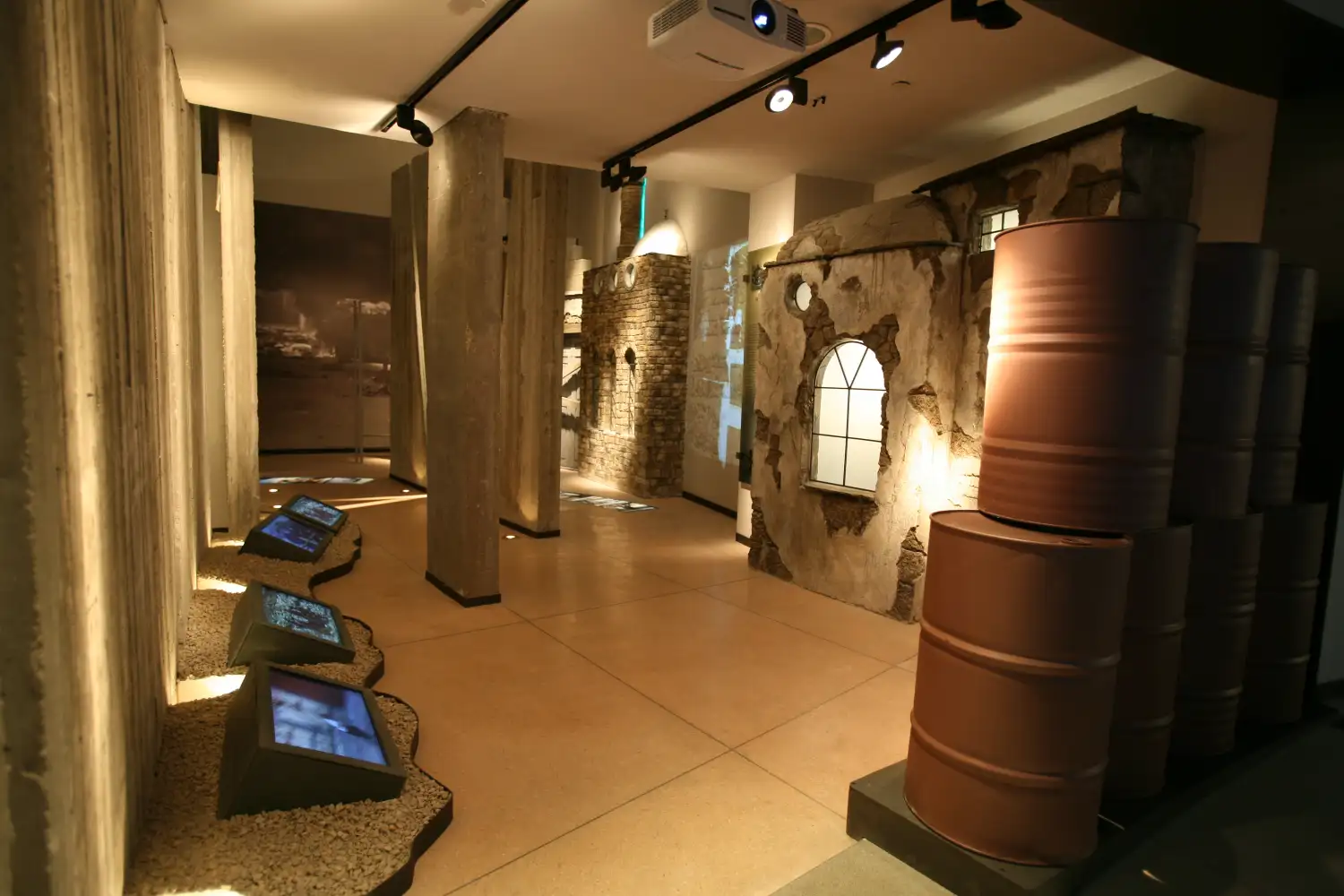
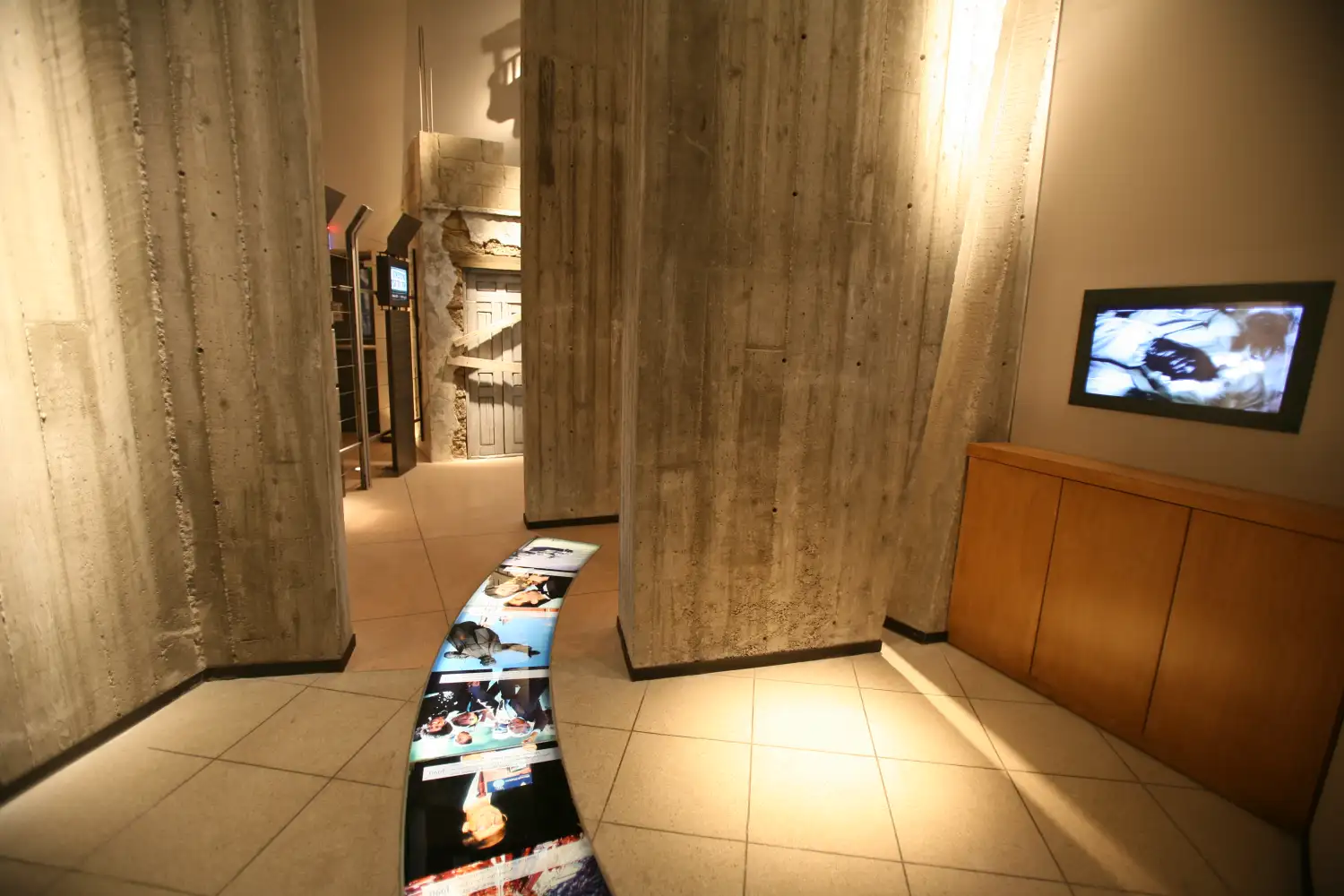
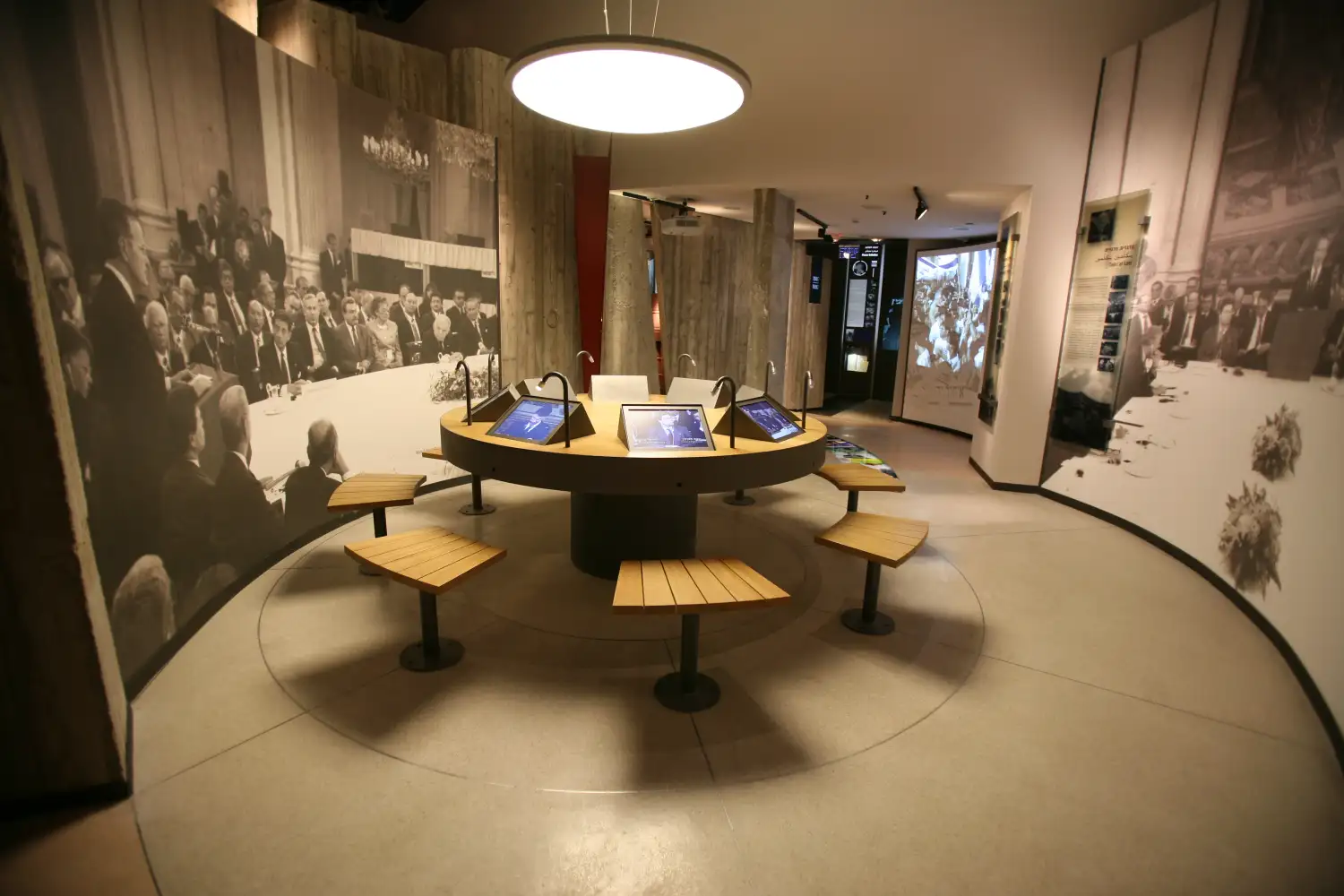
The first part of the room presents the First Intifada, followed by the Gulf War which posed a new threat to the security of the citizens of Israel – long-range missiles. Extensive space is dedicated to a description of the large Aliyah from the Commonwealth of Independent States [the former Soviet Union] and from Ethiopia during the 1990s. Thereafter, the room relates to the International Peace Conference that convened in Madrid.
The room concludes with the political turnover of 1992 with the election of Yitzhak Rabin as Prime Minister.
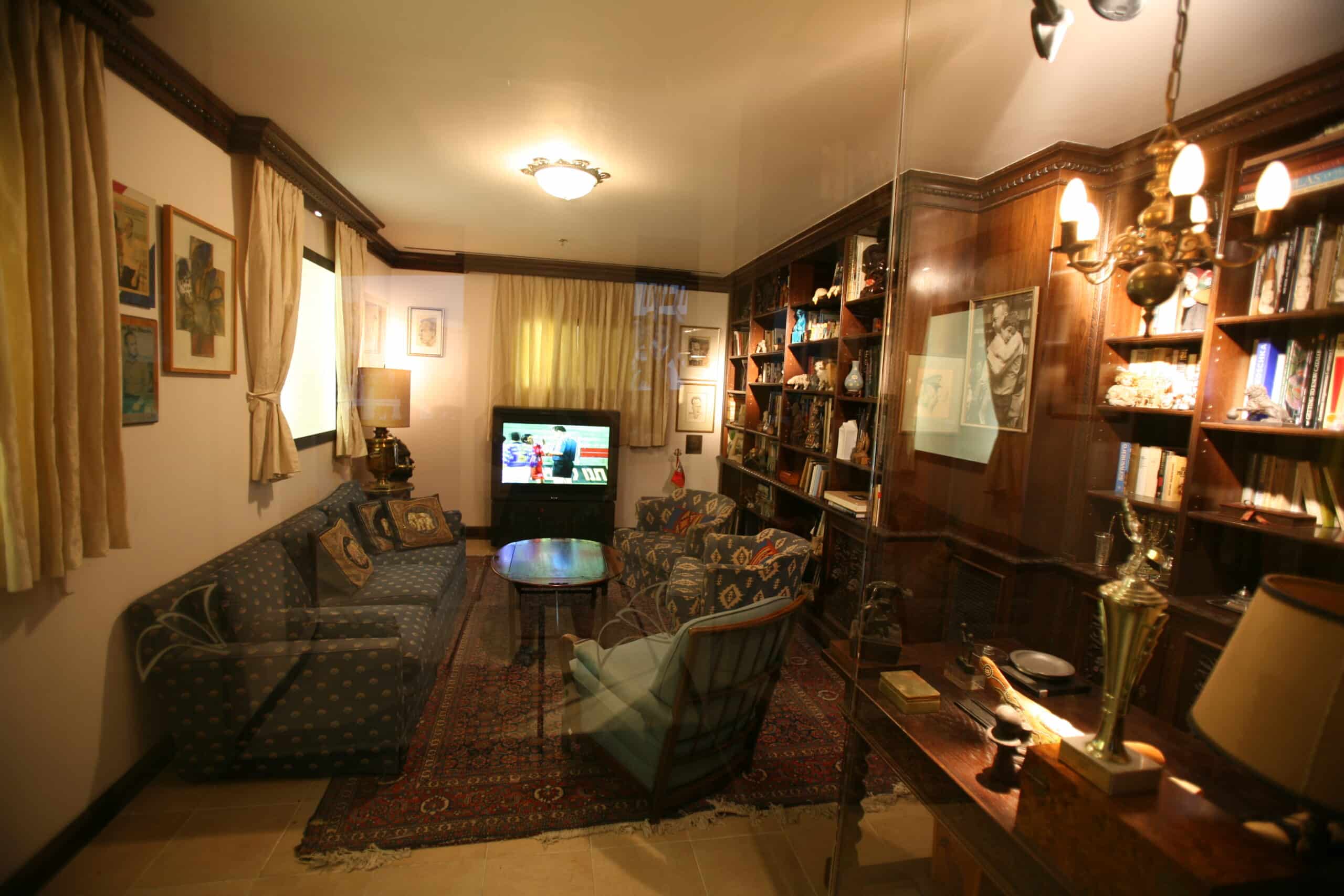
The Prime Minister’s Private Study
The private study of Yitzhak Rabin was transferred to the Israeli museum and preserved there since its opening. The room’s dimensions are similar to the original space, and all of its details, the furnishings, books, and decorative items were placed precisely as in Leah and Yitzhak Rabin’s apartment.
In the center of the room, on the television, is the original Nobel Peace Prize diploma. The last televised sporting event (a soccer match between Hapoel Tel Aviv vs Beit Shean) that Rabin, an avid sports fan, saw before he went to the rally in the square where he was assassinated is shown on the TV.
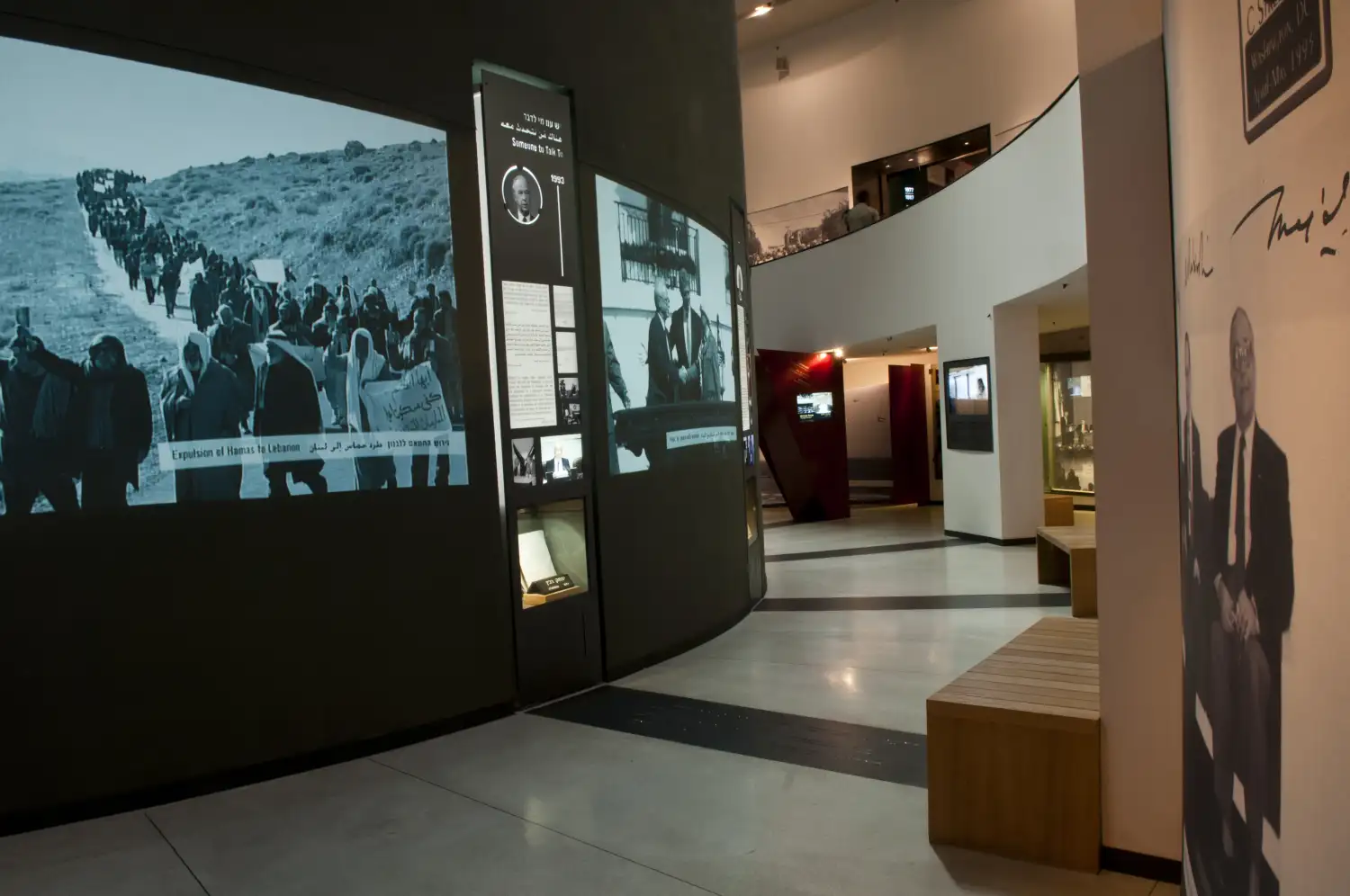
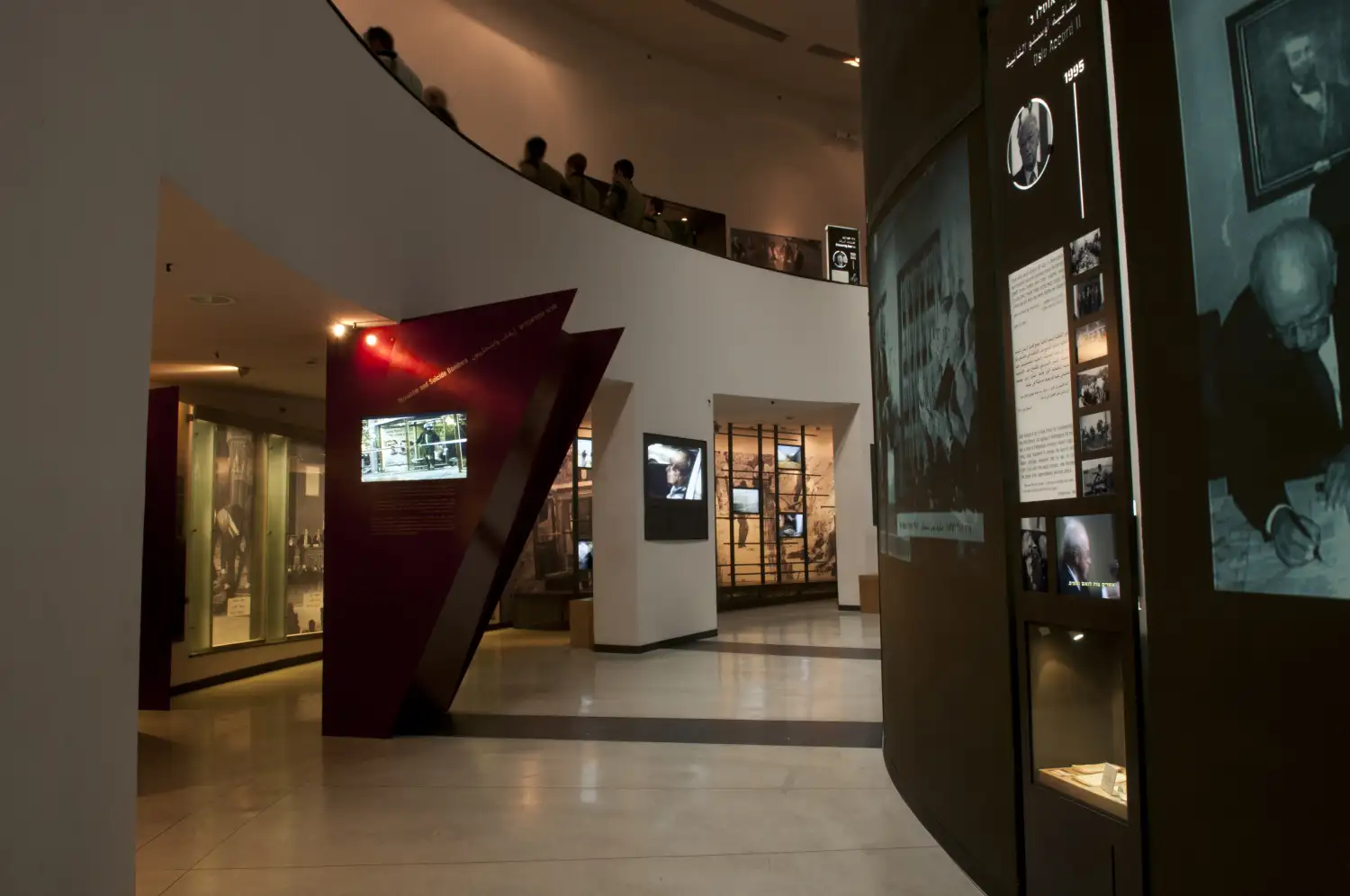
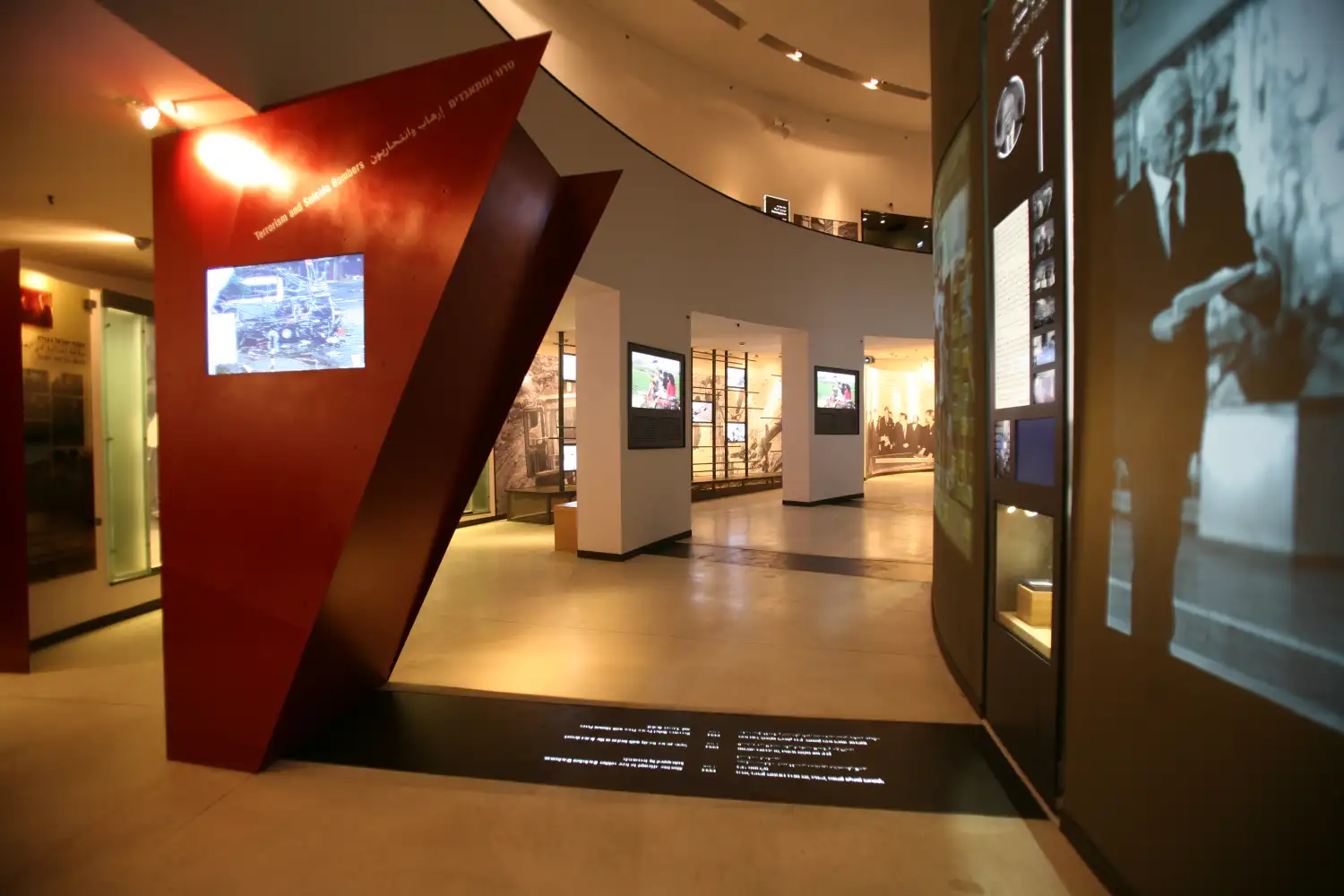
This space is different from the rest of the museum. Until this point, visitors have walked through two parallel stories presented in two separate spaces: the story of Israel was told in the rooms, and the life of Yitzhak Rabin was exhibited in the hallway.
Now the two stories fuse, the personal and the general, into one space – they are connected to each other and impacted by each other.
In this part of the museum, Rabin is represented as a leader striving towards creating a historic turning point in Israel’s relations with the Palestinians and Arab countries, thus changing national priorities. Israeli society and its transformation in response to his leadership is presented in contrast. It is in this context that reactions to Rabin’s policy which began with legitimate protest and turned into reckless and unrestrained incitement are described.
![<p style="text-align: left;"><span style="font-weight: 400;">There are four screens placed in this room, projecting different moments from the hours and the days following the assassination: the announcement of the assassination of the Prime Minister, the shock of the public, the casket procession, and the funeral. </span></p>
<p style="text-align: left;"><span style="font-weight: 400;">Part of the ceiling of this space is made of glass, connecting it to the space above it – the entrance to the museum simulating Kikar Malchei Yisrael [now Rabin Square] on November 4, 1995. The end of the museum returns to its beginning – the assassination of the Prime Minister of Israel and its Minister of Defense.</span></p>](https://www.rabincenter.org.il/wp-content/uploads/2022/08/DSC_5414.webp)
![<p style="text-align: left;"><span style="font-weight: 400;">There are four screens placed in this room, projecting different moments from the hours and the days following the assassination: the announcement of the assassination of the Prime Minister, the shock of the public, the casket procession, and the funeral. </span></p>
<p style="text-align: left;"><span style="font-weight: 400;">Part of the ceiling of this space is made of glass, connecting it to the space above it – the entrance to the museum simulating Kikar Malchei Yisrael [now Rabin Square] on November 4, 1995. The end of the museum returns to its beginning – the assassination of the Prime Minister of Israel and its Minister of Defense.</span></p>](https://www.rabincenter.org.il/wp-content/uploads/2022/08/IMG_6751.webp)
![<p style="text-align: left;"><span style="font-weight: 400;">There are four screens placed in this room, projecting different moments from the hours and the days following the assassination: the announcement of the assassination of the Prime Minister, the shock of the public, the casket procession, and the funeral. </span></p>
<p style="text-align: left;"><span style="font-weight: 400;">Part of the ceiling of this space is made of glass, connecting it to the space above it – the entrance to the museum simulating Kikar Malchei Yisrael [now Rabin Square] on November 4, 1995. The end of the museum returns to its beginning – the assassination of the Prime Minister of Israel and its Minister of Defense.</span></p>](https://www.rabincenter.org.il/wp-content/uploads/2022/08/IMG_6757.webp)
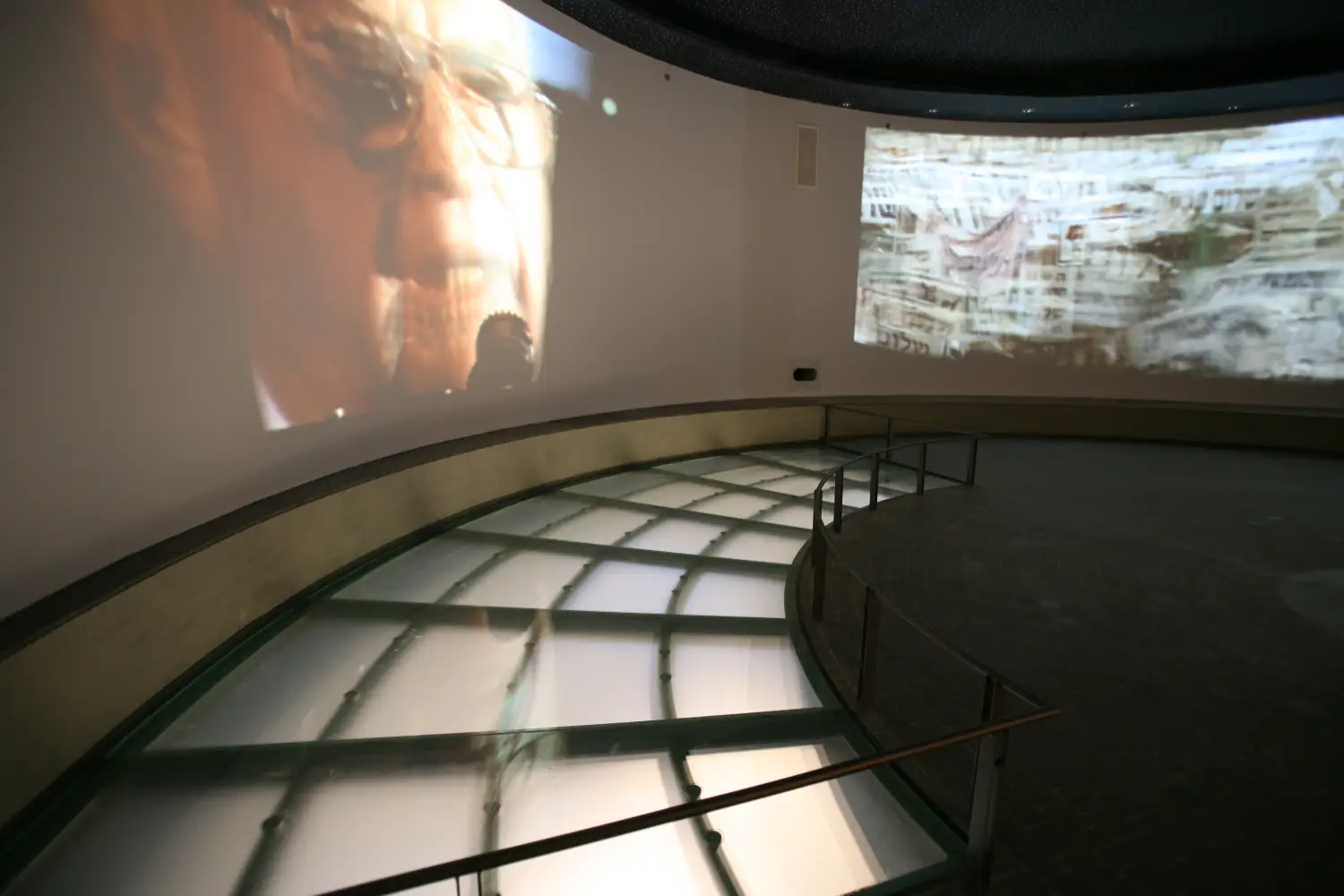
There are four screens placed in this room, projecting different moments from the hours and the days following the assassination: the announcement of the assassination of the Prime Minister, the shock of the public, the casket procession, and the funeral.
Part of the ceiling of this space is made of glass, connecting it to the space above it – the entrance to the museum simulating Kikar Malchei Yisrael [now Rabin Square] on November 4, 1995. The end of the museum returns to its beginning – the assassination of the Prime Minister of Israel and its Minister of Defense.
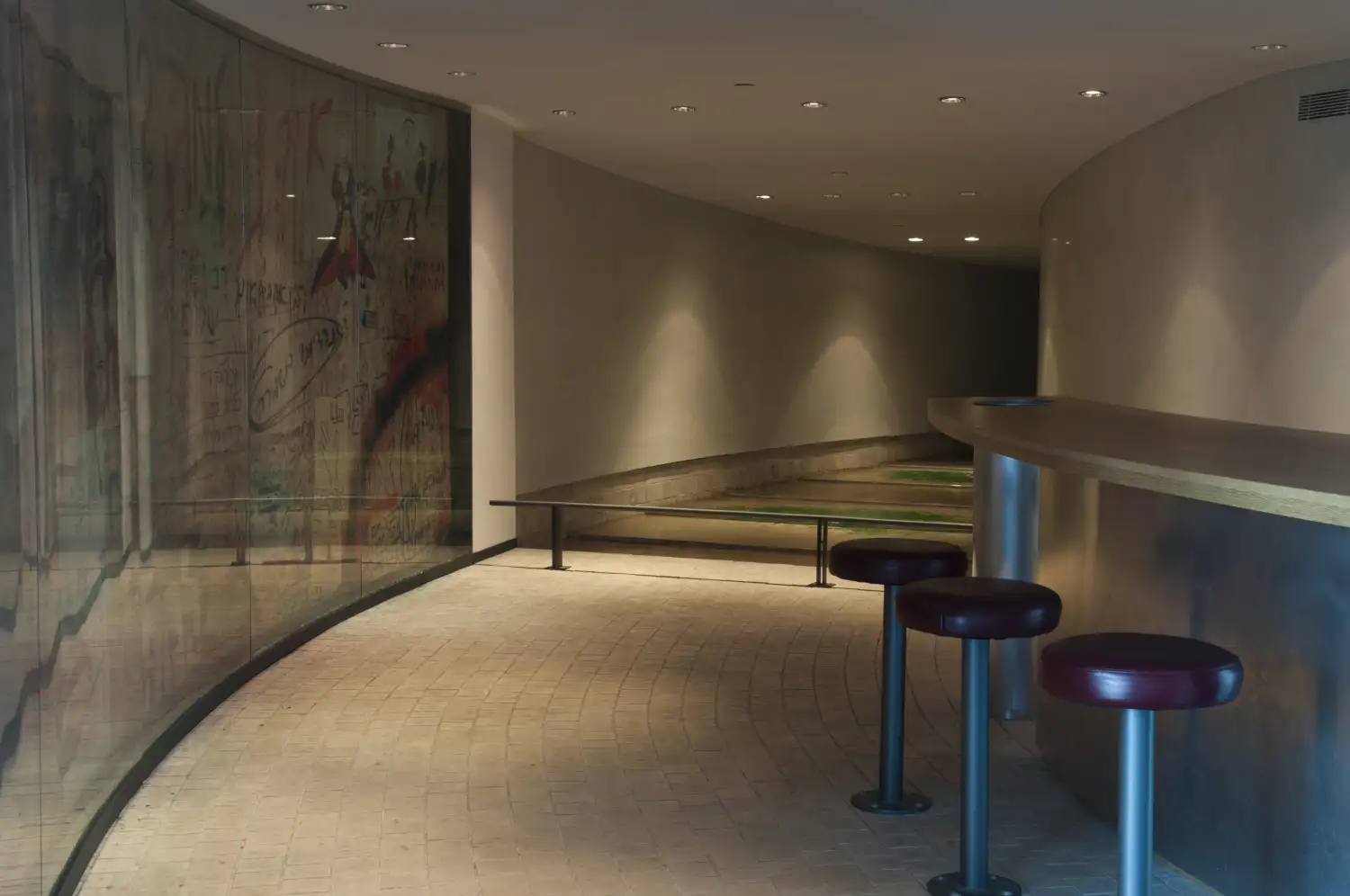
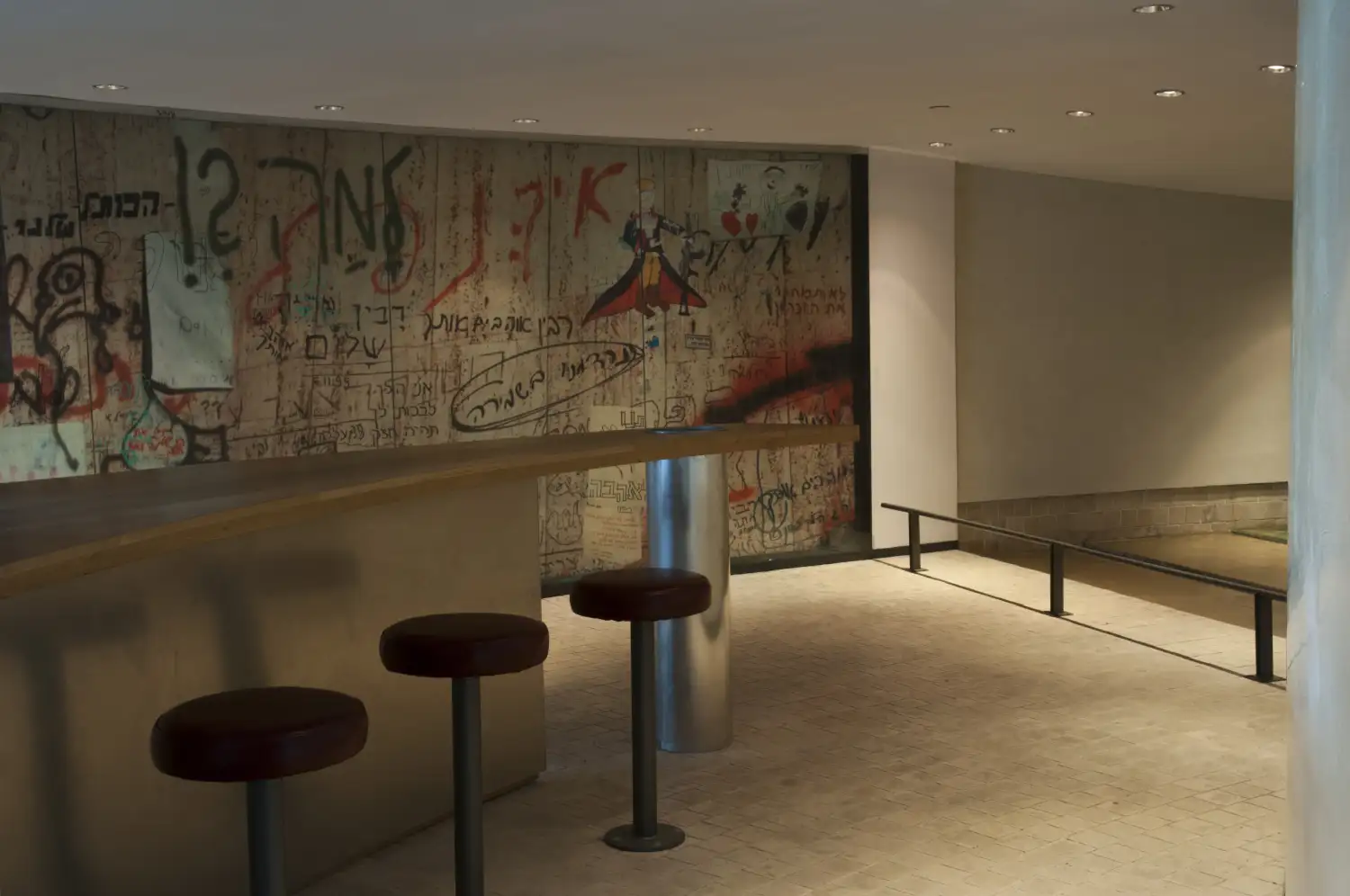
The exit hall from the museum symbolizes the terrible loss and fracture, the continuity of the State of Israel, and the hope of drawing lessons from the murder.

